Books by Eric Douglas

Thriller fiction and Non-fiction

  • Home
  • Mike Scott Thrillers
    • Explosion: Down Below
    • Held Hostage: Search for the Juncal
    • Water Crisis: Day Zero
    • Turks and Chaos: Hostile Waters
    • The 3rd Key: Sharks in the Water
    • Oil and Water: Crash in Curacao
    • Return to Cayman: Paradise Held Hostage
    • Heart of the Maya: Murder for the Gods
    • Wreck of the Huron: Cuban Secrets
    • Guardians’ Keep: Mystery below the Adriatic
    • Flooding Hollywood: Fanatics at the Dam
    • Cayman Cowboys: Reefs Under Pressure
  • Withrow Key
    • Lyin’ Fish
    • Tales from Withrow Key
  • Agent AJ West
  • About the Author
    • Publicity and Interviews
  • Nonfiction
    • For Cheap Lobster
    • Heart Survivor: Recovery After Heart Surgery
    • Oral History
      • Batter Up!
      • Memories of the Valley
      • WV Voices of War / Common Valor
      • Capturing Memories: How to Record Oral Histories
    • Dive-abled: The Leo Morales Story
    • Keep on, Keepin’ On: A Breast Cancer Story
    • WV Voices of War / Common Valor
    • Russia: The New Age
    • Scuba Diving Safety
  • Free Short Fiction
  • Other Fiction
    • Sea Turtle Rescue and Other Stories
    • River Town
You are here: Home / Diving / Single-use plastic the bane of our existence

Single-use plastic the bane of our existence

April 22, 2018 By Eric Douglas

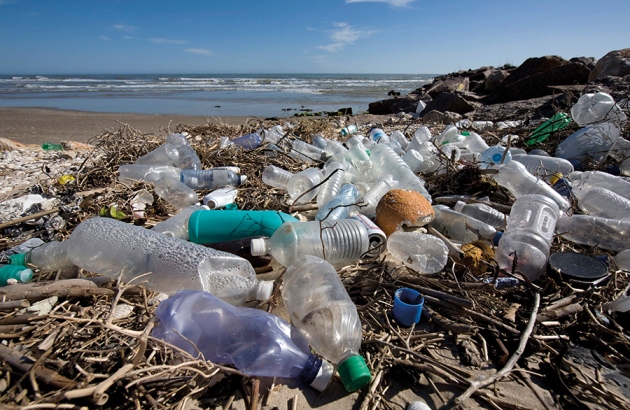
Photo by Bob Daemmrich/Polaris/eyevine from an article in the publication Nature. https://www.nature.com/news/bottles-bags-ropes-and-toothbrushes-the-struggle-to-track-ocean-plastics-1.20432

I am sitting outside on my patio as I write this, listening to an array of songbirds singing while my neighbor mows his grass.

Forty-eight years ago today, the people of the United States got together for the first Earth Day celebration. One of the driving forces behind that original celebration was the book Silent Spring by Rachel Carson. She predicted that the sounds of birds singing would be silenced if we didn’t stop using pesticides that were killing birds before they even hatched.

Over the next few years, those pesticides were banned and bipartisan support in Congress passed the Clean Water Act, the Clean Air Act and created the Environmental Protection Agency. All were signed into law by a Republican president.

An issue that rivals pesticides killing birds is the amount of plastic in the ocean.

You have probably seen stories or viral videos showing marine animals tangled in plastic or dead from ingesting it.

“Plastic has been found in more than 60% of all seabirds and in 100% of sea turtles species, that mistake plastic for food. And when animals ingest plastic, it can cause life-threatening problems, including reduced fitness, nutrient uptake and feeding efficiency—all vital for survival,” according to the Ocean Conservancy.

According to the website Plastic Oceans “We are now producing nearly 300 million tons of plastic every year, half of which is for single use. More than 8 million tons of plastic is dumped into our oceans every year.”

There is also a lot of science that indicates that microplastics are in our bodies, accumulating with every drink we take. Even filtered and processed water.

“Foresight Future of the Sea” a report from the UK Government Office for Science said our oceans have seen “unprecedented change as a result of direct human activity and climate change.”

The report found that 70% of marine litter is non-degradable plastic which is projected to increase threefold between 2015 and 2025.

Even when it is recycled, plastic cannot be turned back into another plastic bottle. Plastic is too stable for that.  It is turned into pellets and used for other things like fiber fill and insulation. The problem is only about 28 percent of bottles are recycled.

An article in Forbes indicates that “globally humans buy a million plastic bottles per minute.” And that “over half a trillion plastic bottles will be sold in 2020.”

A report from the Ellen MacArthur foundation (downloadable PDF) estimates that by 2050, there will be more plastic in the ocean, by weight, than fish.

Living inland, away from the coast, it is easy to think that the problem doesn’t apply to me. But I see tons of plastic floating down the river after every hard rain and collecting at every lock on the river, only to be flushed on downstream. Eventually, it will make it to the ocean. It takes 400 years for that plastic water bottle, or single-use straw, to degrade.

Protecting the environment and making sure birds have trees to roost in, we all have clean water to drink and good air to breathe drink isn’t hard to justify. The same should be true for everything that swims in the oceans.

We rely on the oceans for food, recreation and the very air we breathe. It is time for a new Earth Day call, like the one brought about by Carson, to reduce single-use plastics and keep them out of our oceans.

Filed Under: Diving

Now Available!

Photojournalist Mike Scott is about to get married to the woman he loves — archeologist Frankie DeMarco – but her kidnapping sets Mike on a collision course with the treasure hunter who took her. The man wants Frankie’s help finding a 400-year-old shipwreck so Mike sets out to find it first to get her back […]

View Book

Spooky Flash Fiction For Advent 2025

December 18, 2025 By Eric Douglas

In the 1963 Andy Williams song, “It’s the Most Wonderful Time of the Year,” there is a line that says “There’ll be scary ghost stories, And tales of the glories of Christmases long, long ago.”

Take a flight in a biplane!

https://youtu.be/WN8BrcSNel0
https://youtu.be/lFWWbTXrTJQ?si=SJAadKSt9ZLCbOvX

How I got into diving!

https://youtu.be/gKhw-4tORAM

Heart Blog

Heart Survivor Book Proceeds to Heart Walk

Charleston author Eric Douglas will donate proceeds from his book Heart Survivor: Recovery After Heart Surgery to the 2017 Charleston Heart Walk. Douglas wrote the book to detail his recovery from open-heart surgery and his return to fitness to inspire others facing the same diagnosis. In January 2016, Douglas visited his doctor to rule out the […]

More Posts from this Category

Heart Blog
  • Heart Survivor Book Proceeds to Heart Walk
    Charleston author Eric Douglas will donate proceeds from his book Heart Survivor: Recovery After Heart Surgery to the 2017 Charleston Heart Walk. Douglas wrote the book to detail his recovery from open-heart surgery and his return to fitness to inspire others ...
  • Introduction to the book Heart Survivor
    The following is most of Chapter 2 from the book Heart Survivor. I thought it was important to help my readers understand that I should have recognized the signs and symptoms of impending heart issues, but even with that experience, ...
Read more

Return to Cayman book trailer

Sunlight Prints

Cyanotype printing, also known as Sunlight Prints, is an antique photo printing technique, first used around 1842. Cyanotypes are made by mixing two chemicals (ammonium iron citrate and potassium ferricyanide) and treating paper, cloth or canvas, making it sensitive to ultraviolet light. The sun turns the chemical blue while whatever is shaded stays white. One of the earliest uses for cyanotype was for naturalists to capture images of plants. The same process is used to create “blue prints” of … Read more

The Buzz

You want to explore the ocean, alongside Mike Scott! -- Rosemary E Lunn Diving Journalist and Scuba Industry Fixer
Land Sharks cover
  • Facebook
  • Instagram
  • LinkedIn
  • Substack
  • Threads
  • YouTube

Privacy Policy


NO AI POLICY: Eric Douglas/BooksbyEric does not use artificial intelligence tools to generate, draft, edit, or automate our core work—including writing, artwork or photography. Everything we produce is created by humans.

Copyright © 2026 ·