Books by Eric Douglas

Thriller fiction and Non-fiction

  • Home
  • Mike Scott Thrillers
    • Held Hostage: Search for the Juncal
    • Water Crisis: Day Zero
    • Turks and Chaos: Hostile Waters
    • The 3rd Key: Sharks in the Water
    • Oil and Water: Crash in Curacao
    • Return to Cayman: Paradise Held Hostage
    • Heart of the Maya: Murder for the Gods
    • Wreck of the Huron: Cuban Secrets
    • Guardians’ Keep: Mystery below the Adriatic
    • Flooding Hollywood: Fanatics at the Dam
    • Cayman Cowboys: Reefs Under Pressure
  • Withrow Key
    • Lyin’ Fish
    • Tales from Withrow Key
  • Agent AJ West
  • About the Author
    • Publicity and Interviews
  • Nonfiction
    • For Cheap Lobster
    • Heart Survivor: Recovery After Heart Surgery
    • Oral History
      • Batter Up!
      • Memories of the Valley
      • WV Voices of War / Common Valor
      • Capturing Memories: How to Record Oral Histories
    • Dive-abled: The Leo Morales Story
    • Keep on, Keepin’ On: A Breast Cancer Story
    • WV Voices of War / Common Valor
    • Russia: The New Age
    • Scuba Diving Safety
  • Free Short Fiction
  • Other Fiction
    • Sea Turtle Rescue and Other Stories
    • River Town
You are here: Home / Blog Posts

Imagining life on a sternwheeler heading down river

August 7, 2013 By Eric Douglas

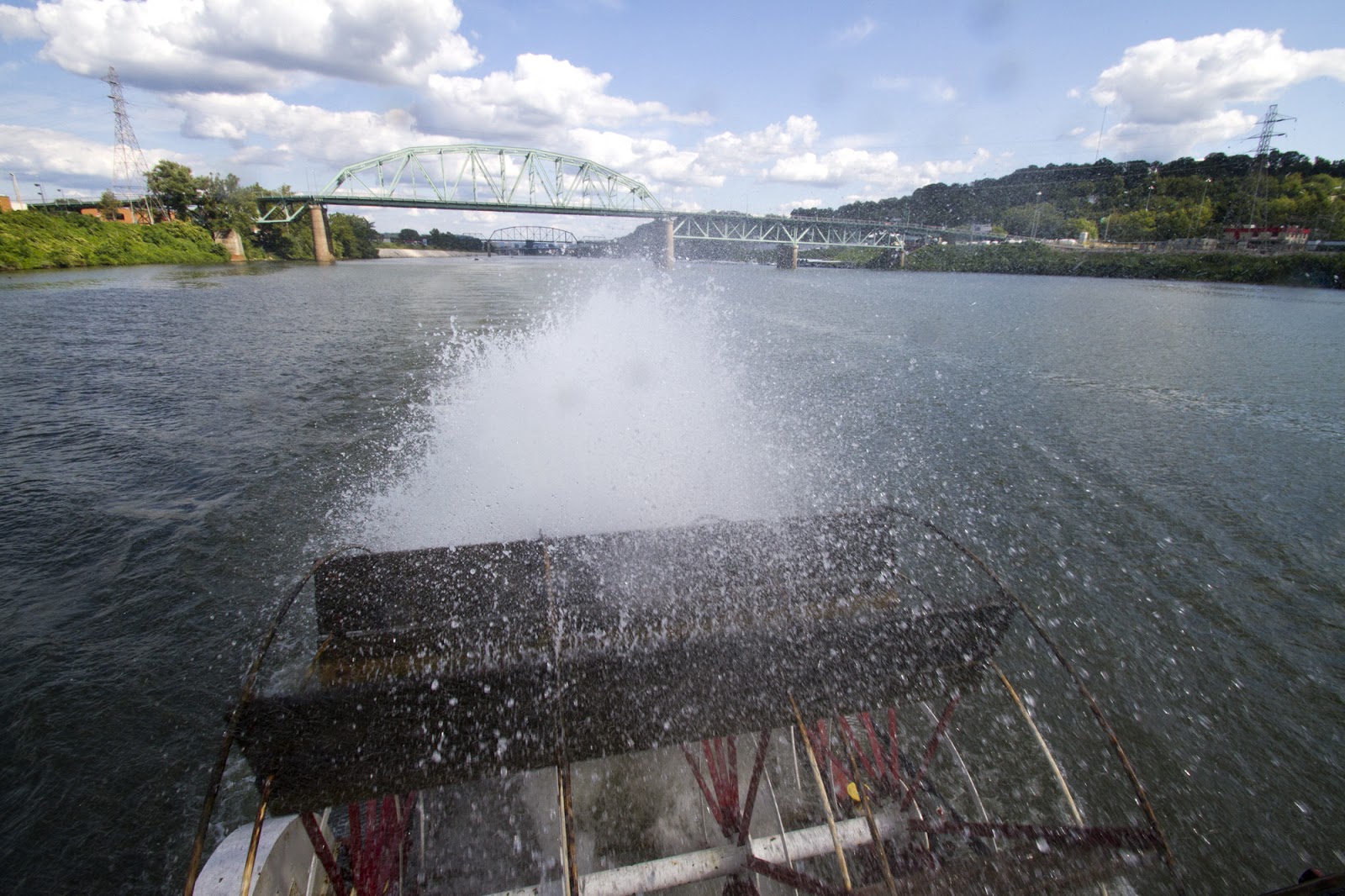
I’ve always been fascinated by the river, river boats and the age of steam in West Virginia. It doesn’t hurt that one of my closest friends, JD Pauley, owns the sternwheeler, Hobby III, so I’ve spent an undo amount of time watching the wheel throw water in the air and imagining life 100 years ago.


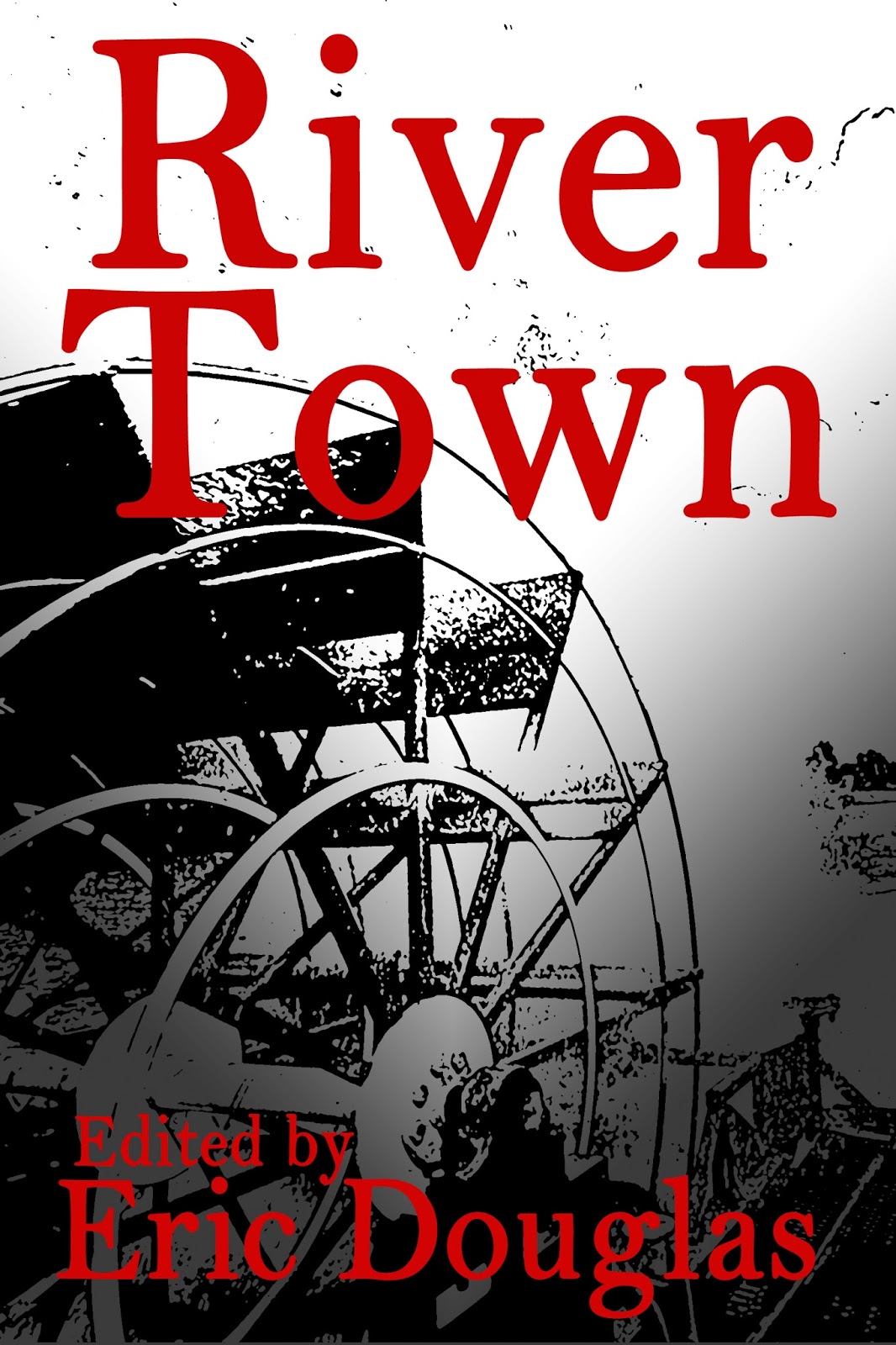
Yesterday, Jerry Sutphin gave a presentation at the Archives and History Library in the West Virginia Culture Center on The Great Kanawha River and River Transportation in West Virginia. When JD emailed me about the lecture, I immediately knew I was going. I was particularly interested since my new book River Townwill be available on August 12. River Town is a collection of short stories set in West Virginia, on the river, in 1890 when the river was the center of everything. One story in the book features a riverboat captain and his steamboat, the Miss Jayne Marie. 

Sutphin explained that any river west of the Appalachian mountain chain is considered to be a western river. When that term came into use, there were only the original 13 colonies in the United States. For settlers heading west, rivers were the natural highways and the easiest way to get natural resources back to the cities. That commerce to bring salt, coal and timber out of the mountains spurred the development of steam boats and barges carrying everything from apothecaries to zoos and everything in between.
The only problem with riverine commerce was the rivers were seasonal; you couldn’t rely on them to be deep enough to run on year round. In 1884, the federal government began a lock and dam system that maintained the river level at nine feet deep, deep enough for any river boat.
The Great Kanawha River is the only river totally within the boundaries of West Virginia. It is 99 miles long with only 91 miles of that navigable. In spite of its diminutive nature, the commerce that has floated through those locks, and still does, is almost unimaginable. Salt, coal, oil and gas and timber have all moved down the river, through those locks and off to markets around the world.
Originally, there were 10 locks on the river. Eleven were planned, numbered and mapped out, but only 10 were built. In a fit of government logic, #1 was planned for a section of the river above Montgomery, but it was never constructed. Many people are confused about how many locks were on the Kanawha since #11 was built near Point Pleasant. People naturally assume there were 11 locks, according to Sutphin. Later, that number was reduced to three larger dams and two of those were expanded in a third series of changes in the last 20 years.
I kept listening to Sutphin’s lecture, hoping I didn’t hear anything that would make me think “Oh No! I got that wrong” but that moment never came. River Town isn’t a historical work. Rather, it is a collection of fictional stories about the river. Hopefully, though, readers will escape to a time on the river when river boats were king and the only way to get anywhere was by booking passage. And then they will see the river as I see it from the back of a sternwheeler.
.

Filed Under: Adventure, Books, New Releases

River Town: Writing about home

August 5, 2013 By Eric Douglas

I’ve always been intrigued by the history of the river that runs through my home town of Charleston, West Virginia. The Kanawha River is slightly less than 100 miles long, from the headwaters where the New and Gauley rivers meet to where it spills into the Ohio River at Point Pleasant, but an amazing amount has happened along that 100 miles. There have been Adena and Native American settlements, forts and battles, discoveries of salt, timber, coal, oil and natural gas, boom towns and busts.


From the time I wrote my first novel in 2005, I started dreaming about a collaborative fiction project where a group of writers would join together to write a series of stories all set in the same location. I read Thieves World in my formative years and thought that was the coolest thing ever. When I returned home to Charleston after living away for nearly 15 years, everything fell together and River Town was born.


The book is six stories (with a couple narrative pieces at the beginning and end) set in River Town in 1890. The location is effectively Charleston, but it could be just about anywhere on the river at that time. We created characters for the time and location and then shared them, weaving each other’s characters into our own stories. It was a lot of fun, although it did come with the unique challenges of sharing. Most writers are fairly solitary in their work and sharing early drafts with each other was a bit nerve-wracking.
I’ve shared the book with a few close friends. This is one of my favorite early reviews:
“Rather than the six stand-alone stories from different writers united around common characters in the same (historic) place and time that I expected, RIVER TOWN, in its whole is more like a progressive dinner where we travel to each writer’s home for each portion of a delightful collective meal. Every course is delicious on its own, but the true treat is finishing the last bite and appreciating the beauty of the sum of its parts.” 

– Daniel Boyd, Filmmaker, Author
The following is the book jacket description of the book:

“Hayden Lowe may or may not have killed a man out west, and no one seems to know for sure why he’s back in River Town; his friend, Lillian Conley, is keeping secrets of her own in her journal. Will Captain JD Dawson lose his beloved sternwheeler, the Miss Jayne Marie, in a winner-takes-all bet?  Julia Hubbard has a secret project; Andrew Wilson is plotting on the dusty streets of River Town, and what about that strange Dame Roxalana? There is more to her than anyone is willing to say.  The men in the coal mines around River Town are showing strange symptoms no one can explain, yet everyone is whispering about them.

Before all is said and done, each of these characters will intersect in unexpected ways. The resolutions are as suspenseful as they are satisfying.
River Town is a collection of short stories set in 1890s West Virginia by six different authors. The tales range from adventure to romance to intrigue and fantasy. Each story stands alone, yet together they take readers to a time along the Kanawha River just after the Civil War when families were still struggling to recover and before the railroad came through the mountains. The river was the center of everything.
This project was created by Eric Douglas and features the work of Shawna Christos, G. Cameron Fuller, Elizabeth Gaucher, Katharine Herndon and Jane Siers Wright.”
River Town will be available in print and on Kindle next week. Stay tuned!

.

Filed Under: Books, New Releases

Recycle to protect West Virginia mountains and streams

July 31, 2013 By Eric Douglas

I was dropping off my recycling at the Kanawha Country Solid Waste Authority Recycling Center on Slack Street when a man there looked at me and said, wryly, “Saving the world, one plastic bottle at a time.” I took it he realized it was an uphill battle, but it was still important enough to do. I gathered that because he had more cans and bottles than I did.

For a long time, recycling had the stigma as something “tree-huggers” worried about or that it was too impractical to deal with. I honestly think of it in terms of natural resources and being a good steward of our environment—something God tells us we should do.

According to the website GreenWaste.com: “The amount of wood and paper we throw away each year is enough to heat 50,000,000 homes for 20 years.” In my mind, that makes recycling a national security issue. If we didn’t throw all that paper away, would we be closer to energy independent? GreenWaste.com says so. “Aluminum cans account for less than 1% of the total U.S. waste stream, even so, the energy required to replace just the aluminum cans wasted in 2001 was equivalent to 16 million barrels of crude oil, enough to meet the electricity needs of all homes in Chicago, Dallas, Detroit, San Francisco and Seattle.”

Recycling can be a nuisance, but after a while it becomes a habit and you just do it. On vacation a few weeks ago, there was no place to put cans and bottles to recycle them. I had to throw them away and it drove me crazy.

Another way to reduce waste is with reusable shopping bags. I leave mine in the trunk of my car so I always have them. When I was researching my children’s book Sea Turtle Rescue I learned that sea turtles mistake plastic shopping bags for food, eat them, and die. (I know there aren’t any sea turtles in West Virginia, but you would be surprised how far those bags can travel.) If you don’t want to bother with reusable bags, at least take the store bags back to the store and drop them off. They are recyclable, too.

A final tidbit: The Environmental Protection Agency estimates that 75 percent of solid waste is recyclable, but only about 30 percent is actually recycled. We do this, but at the same time we complain about landfills. I just read that recycling in Kanawha County has taken off so much in recent months that they have had to hire additional staff to keep up with the demand. That’s fantastic news. I’d love to see them have to hire even more people. I can’t think of a better way to keep people working and protect the beautiful West Virginia hills.

.

Filed Under: Uncategorized

Tomatoes from the backyard taste a little better

July 24, 2013 By Eric Douglas

There’s a tiny little corner in the backyard that we’ve put to good use. Last fall I cut out an overgrown bush and the poison ivy growing around it. We discussed what to do with that section of yard several times. Flowers? Grass? A garden?

Because of what seemed like an unusually cool spring we got a fairly late start, but finally decided to plant a small vegetable garden. Neither my wife nor I had “gardened” since childhood, but we thought it would be fun.

My role was digging up and hoeing the earth so it was plantable. (It’s really too small to bother with a tiller.) My wife did the planting and my daughters fertilized and watered it. Since then, we’ve kept it watered and mostly weed free.

Not really knowing (or remembering) how things would grow, we planted a few things in the plot that have promptly been covered up by the leaves of the other things. Alas, I don’t think my Habanero chili peppers are going to produce anything this year. The squash and cucumber leaves have taken over the entire middle section of our little plot.

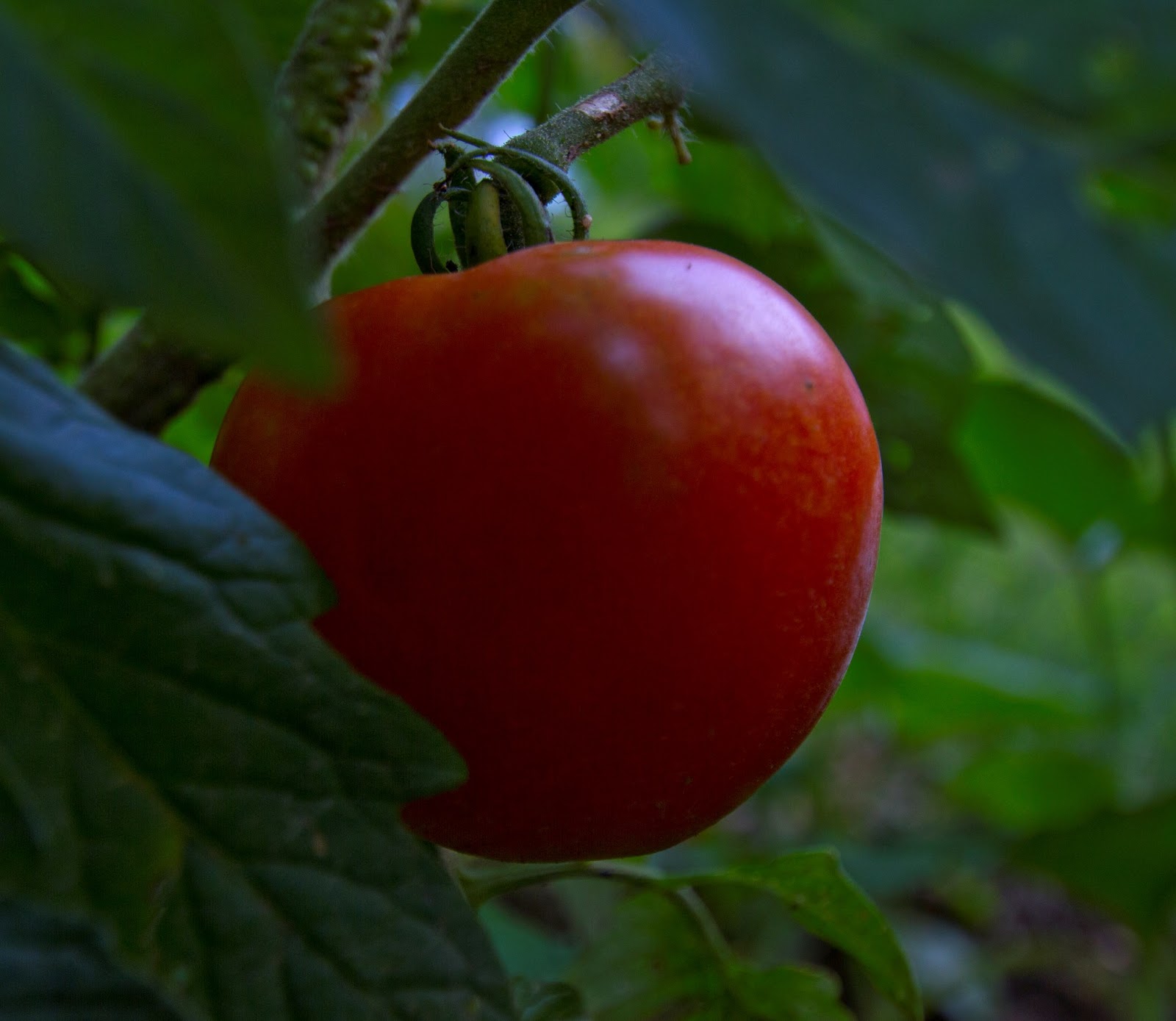
A couple nights this week, I’ve used vegetables from our garden to fix dinner…a tomato in the pasta and a grilled squash with pork chops. That’s been fun, but my wife and I have both agreed that we’re glad there is a farmer’s market close by so we don’t have to rely on our little plot to feed ourselves.

I see the appeal of small community gardens where people who live in cities can have a chance to work in the dirt, care for something and see the fruits (vegetables?) of their labor. It’s satisfying to put some work into the ground and get something in return. I’m sure in many cases those people grew up somewhere more rural or at least suburban but life and work have taken them to the city. Those gardens give them an opportunity to get their hands dirty.

Another lesson learned in childhood I suppose. We had a garden for many years growing up. My mom could tell me, I’m sure, but I expect I had to be coerced to go work in the garden; planting and weeding and then pulling up potatoes and carrots and picking squash and tomatoes. This whole experience has made me wonder if our lack of “connection” with the earth has made many of us take it for granted. Many of us don’t get our hands dirty anymore so we don’t know what joy it can bring us.

I have no doubt we’ll plant a garden again next year, now. And who knows? It might just get a little bigger.

.

Filed Under: Uncategorized

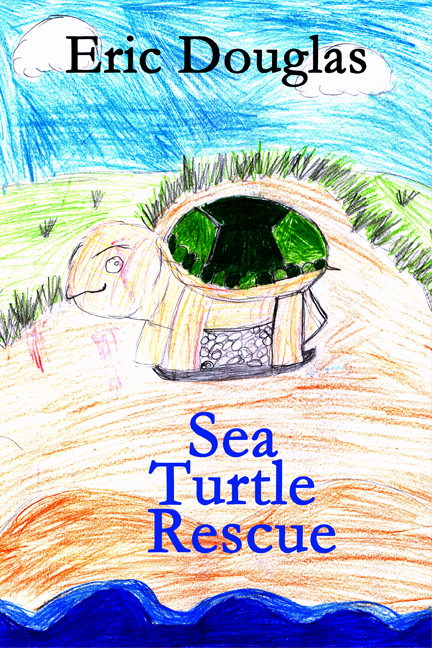
Sea Turtle Rescue: In four languages and counting

July 18, 2013 By Eric Douglas

Sea Turtle Rescue was the first children’s book I wrote for my daughters. Sea Turtles have become a special thing for us as well. When we are out, especially at the beach, we will buy sea turtle jewelry (for them, not me) or other mementoes that include sea turtles…because of that story.


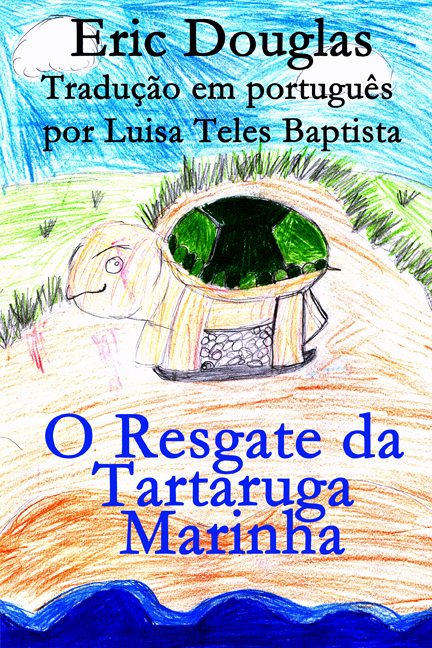
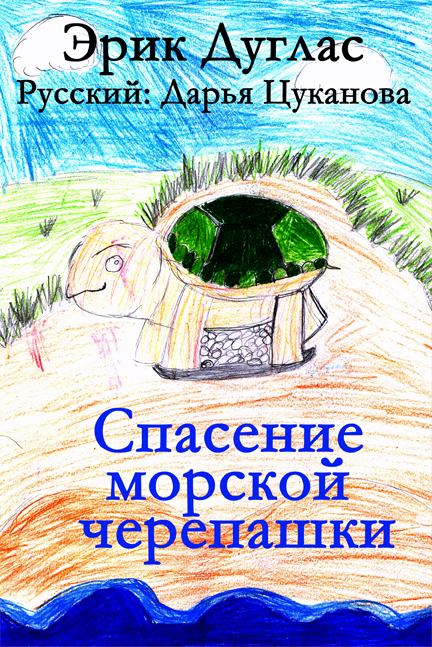
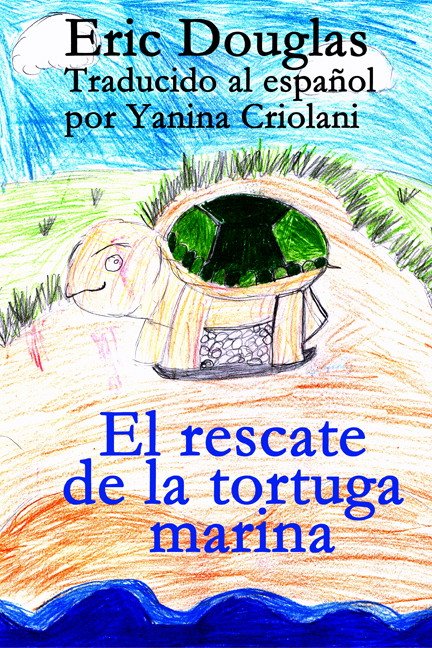
Sea Turtle Rescue is now available in four languages: English, Spanish, Portuguese and Russian. Russian is only available in paperback as Kindle does not support the Cyrillic alphabet. The other three languages are available for both Kindle and paperback. 

In many ways, sea turtles are the “canary in a coal mine” for the oceans. If sea turtles are healthy and thriving, the oceans are too. And if the oceans are thriving, we are all thriving. What I really like about this story is it includes information on protecting sea turtles, while presenting two young girls as strong and passionate characters.


I hope this story inspires your family like it has mine. 

Below you will find descriptions of the book in all four languages, with links to the book on Amazon. You can read previous blog posts about the story:

  • Re-release of Sea Turtle Rescue
  • Early Reviews
  • Original Blog post when it was published by Oceana
Sea Turtle Rescue
Kindle and Paperback

When an injured sea turtle shows up near their home on the Outer Banks of North Carolina, Jayne and Marie, along with their friends Javier and Monique, search the beach to find the turtle’s nest and protect it from danger. They know the time is getting short and if they don’t find it soon, the eggs might not get a chance to hatch.


Sea Turtle Rescue is written for children 6-9-years-old with illustrations drawn by elementary school students. The story is exciting but also includes information on how to protect sea turtles and their nests.


O Resgate da Tartaruga Marinha (Portuguese Edition)

Kindle and Paperback


Quando uma tartaruga ferida aparece perto de sua casa nos Outer Banks, na Carolina do Norte, Jayne e Marie, junto com seus amigos Javier e Monique, vão à praia em busca do ninho que ela deixou para trás, para tentar ajudar a proteger os ovos do perigo. Eles sabem que o tempo é curto e que se não encontrarem o ninho logo, pode ser tarde demais.

O Resgate da Tartaruga Marinha é um livro para crianças entre 6 e 9 anos de idade, com ilustrações feitas por alunos que cursam o ensino fundamental e estão nesta faixa etária. A história é uma envolvente aventura que traz também informações sobre como proteger as tartarugas e seus ninhos.


Спасение морской черепашки

Russian: Paperback (Cyrillic Alphabet not yet supported on Kindle.)

Когда раненая морская черепашка появилась около дома Джейн и Мари в местечке Аутер Бэнкс Северной Каролины, девочки со своими друзьями Джайвером и Моникой, отправились на пляж, чтобы найти черепашье гнездо и спасти его от опасности. Ребята знали, что времени совсем мало и, если они не смогут вовремя найти гнездо, то дети черепашки никогла не появятся на свет.

История «Спасти морскую черепашку» написана для детей от 6 до 9 лет. Иллюстрации созданы детьми начальной школы. Увлекательная история содежит полeзную информацию о защите морских черепашек и их гнезд.


El Rescate de la Tortuga Marina (Spanish Edition)

Kindle

and Paperback

Al aparecer una tortuga marina cerca de su casa en los Outer Banks en Carolina del Norte, Jayne y Marie, junto con sus amigos Javier y Monique comenzaron a buscar el nido de la tortuga para ponerlo a salvo de los peligros. Sabían que tenían poco tiempo y que si no lo encontraban pronto las tortugas no tendrían ninguna posibilidad de romper el cascarón.


El Rescate de la tortuga marina está escrito para niños entre los 6 y 9 años y ha sido ilustrado por alumnos de escuela primaria. Es una historia fascinante que además brinda información sobre cómo proteger a las tortugas marinas y sus nidos.

.

Filed Under: Books, Diving, New Releases

Summer Vacation isn’t always “a trip”

July 10, 2013 By Eric Douglas

When school started up in the fall, the first assignment elementary school teachers used to give was to write a paper about “What I did on my summer vacation”. I’m sure it was simply a way to get to know the new crop of students and to shake the rust off of our sun-baked brains. They probably could have cared less what we actually did.

I remember being a little embarrassed at the time when I didn’t have a big event to report on like some of my classmates. Growing up, we didn’t go to “the beach” every summer. I think I was about 11 years old before I saw the ocean for the first time. On the other hand, I do remember a lot of camping, horseback riding, fishing and swimming in my summers. My brother and I did summer 4-H camps and Vacation Bible School and various other activities, mostly intended to keep our mother from pulling her hair out. Those were the things I wrote about in my back to school essay on the first day of school.

As summer breaks from school get shorter and parental work schedules get tighter, I think we try to do “more” in less time. We parents often think about the summer trip without remembering the little activities. Don’t get me wrong, I am all for a summer vacation. I’m all for taking off and going to the beach, digging my toes in the sand and playing in the surf. It is a great excuse to take a break from work, play, nap and relax.

 I just wonder if, in the process of planning the big summer event, we forget about the smaller activities and outings that make summer just as special and just as memorable; the day trips to the parade, the festival or the lake often mean more to us as we look back on our childhood. I know those are the things I think back on now that I have my own children. (I realize there is a fallacy in my logic. I’m just remembering my childhood. If we had taken those big trips, I would probably remember them, too.)

Still, sometimes I think we put too much emphasis on the things that don’t necessarily matter to make up for not emphasizing the things that do. We worry about making sure summer is memorable for our children, without making sure we spend time with them and help them experience life. My daughters have been to the beach a dozen times in their young lives and we are making another trip this summer. Yet, it occurs to me that they haven’t seen many of the things that I saw growing up close to home.

Which one of us had the better childhood?

.

Filed Under: Adventure

  • « Previous Page
  • 1
  • …
  • 50
  • 51
  • 52
  • 53
  • 54
  • …
  • 87
  • Next Page »
Now Available!

Photojournalist Mike Scott is about to get married to the woman he loves — archeologist Frankie DeMarco – but her kidnapping sets Mike on a collision course with the treasure hunter who took her. The man wants Frankie’s help finding a 400-year-old shipwreck so Mike sets out to find it first to get her back […]

View Book

  • Facebook
  • Instagram
  • LinkedIn
  • Substack
  • Threads
  • YouTube
Privacy Policy

Copyright © 2025 ·