Books by Eric Douglas

Thriller fiction and Non-fiction

  • Home
  • Mike Scott Thrillers
    • Held Hostage: Search for the Juncal
    • Water Crisis: Day Zero
    • Turks and Chaos: Hostile Waters
    • The 3rd Key: Sharks in the Water
    • Oil and Water: Crash in Curacao
    • Return to Cayman: Paradise Held Hostage
    • Heart of the Maya: Murder for the Gods
    • Wreck of the Huron: Cuban Secrets
    • Guardians’ Keep: Mystery below the Adriatic
    • Flooding Hollywood: Fanatics at the Dam
    • Cayman Cowboys: Reefs Under Pressure
  • Withrow Key
    • Lyin’ Fish
    • Tales from Withrow Key
  • Agent AJ West
  • About the Author
    • Publicity and Interviews
  • Nonfiction
    • For Cheap Lobster
    • Heart Survivor: Recovery After Heart Surgery
    • Oral History
      • Batter Up!
      • Memories of the Valley
      • WV Voices of War / Common Valor
      • Capturing Memories: How to Record Oral Histories
    • Dive-abled: The Leo Morales Story
    • Keep on, Keepin’ On: A Breast Cancer Story
    • WV Voices of War / Common Valor
    • Russia: The New Age
    • Scuba Diving Safety
  • Free Short Fiction
  • Other Fiction
    • Sea Turtle Rescue and Other Stories
    • River Town
You are here: Home / Blog Posts

Rest in Peace Eugene Lusk

March 11, 2013 By Eric Douglas

I’ve seen a series of different numbers but somewhere between 600 and 1000 World War II veterans die each day. Less than 10 percent of the men and women who served in that war are still alive. So, it shouldn’t come as a great shock that one of the men I interviewed for the upcoming Voices of War documentary project has just died.

Eugene Lusk was born January 18, 1925 on Bud Mountain, West Virginia. He died over the weekend at 88 years of age. I met Mr. Lusk last August at his home in Herndon, WV. He was a warm and gracious man and I instantly liked him. He had the easygoing manner of a country boy who was at home in his environment. I wrote about meeting him last summer in the blog post The people you meet ARE the adventure.
Mr. Lusk left for Europe on March 23, 1944 after loading ships. He liked to tell the story that he was sick 10 of the 12 days he spent crossing the Atlantic, living on peanuts and Coca-Cola. After spending months in Europe training, he boarded a troop ship (again getting sick) and eventually touched mainland Europe on June 6, 1944. That was D-Day. He found himself in the middle of Utah Beach. He was relatively lucky as Utah Beach was less heavily fortified than Omaha Beach. That was good as far as he was concerned because he wasn’t an infantryman, he was a stevedore trained to load and unload supplies for the invasion. That was his description for himself, but it was mostly him being modest. He saw combat, survived air raids, guarded prisoners and survived to come home.
Just after he was discharged and returned home to West Virginia, he met the young lady who would soon become his wife, Ethel. He said he saw her in church singing at an evening revival and thought she was beautiful. He walked her home that night and never looked back. They were married about a year later and made it 66 years together before he passed away.
Interviewing West Virginia war veterans for the Voices of War documentary has been an honor and a privilege. I have met so many gentle and honorable men and women who served their country and then came home to build a life—not just in World War II, but in every conflict. Some stories, of course, touch you more than others and Mr. Lusk was one of those people. After we had talked a while, he insisted I join him and his wife for lunch: brown beans, corn bread and all the fixin’s. Just what you would expect.
I’m in the final editing stages of the documentary. I am working on the final release details right now, but it will be out in time for Memorial Day. My one hope is the men and women I have interviewed for the project (and others who served) say that I got it right and the other people who see it say “I never knew” and then look for a veteran to say thank you.
Rest in Peace Eugene Lusk and thank you for your service.
.

Filed Under: Documentary

Stereo View of the Bridge Demolition

March 8, 2013 By Eric Douglas

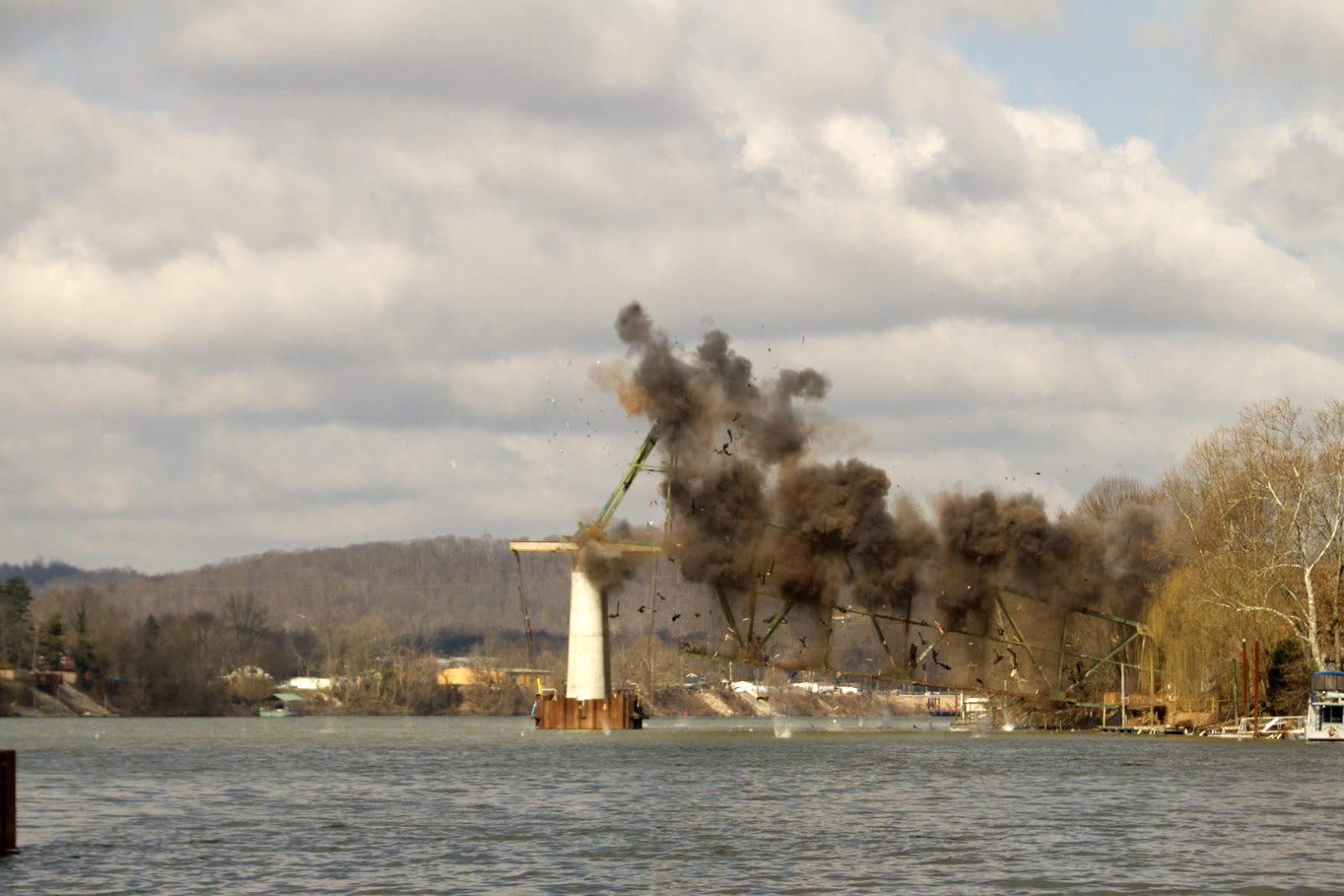
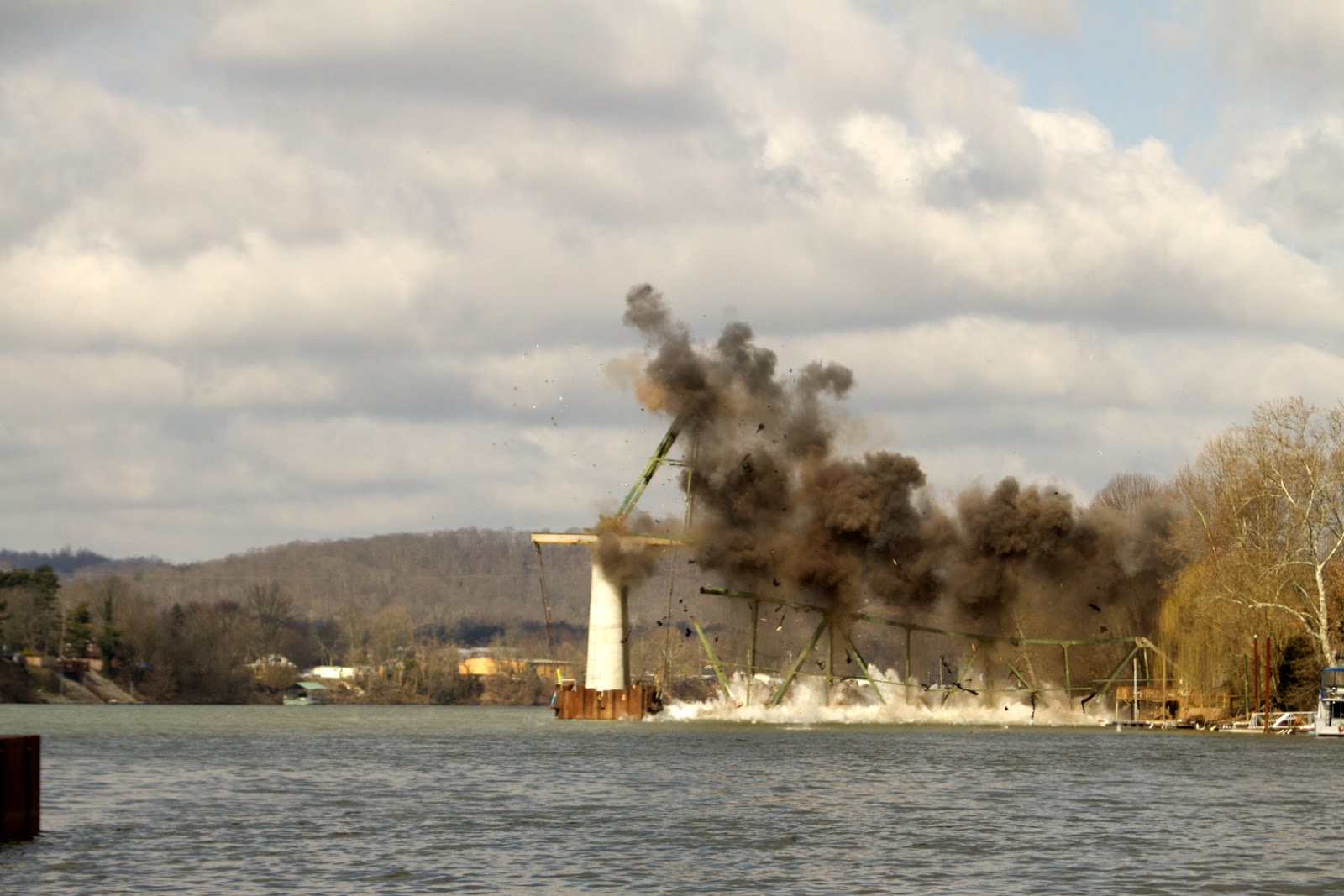
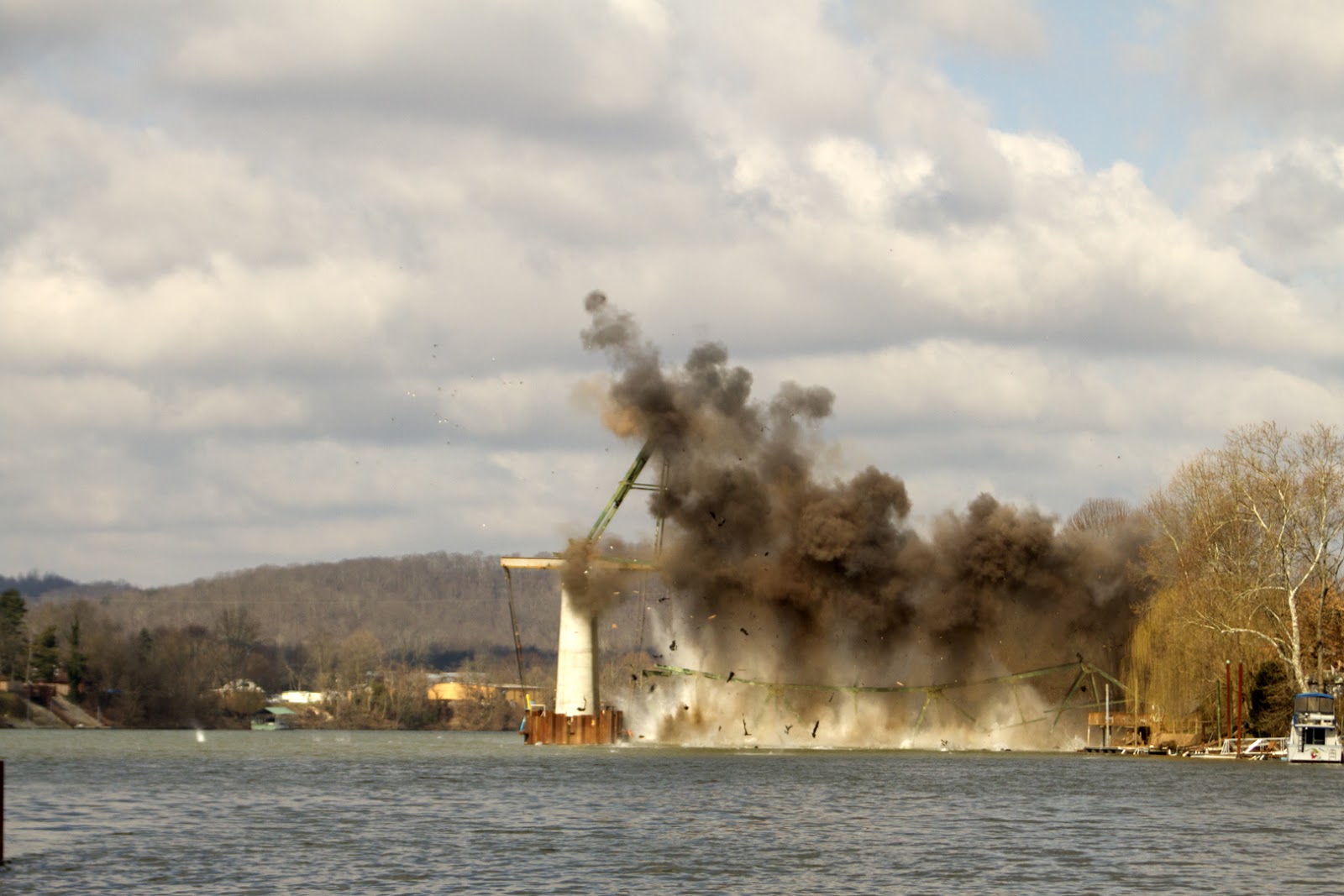
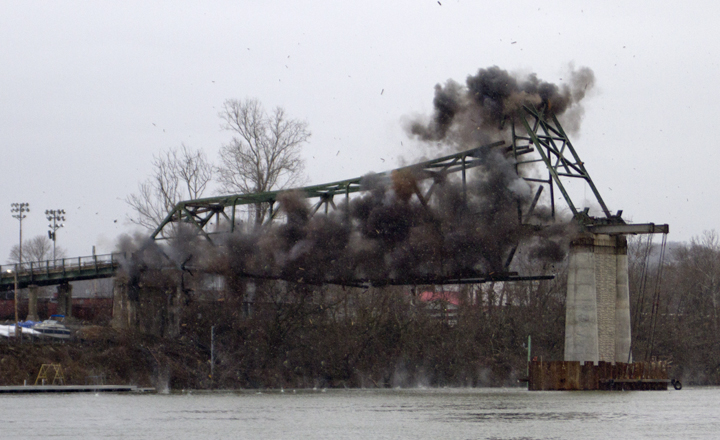
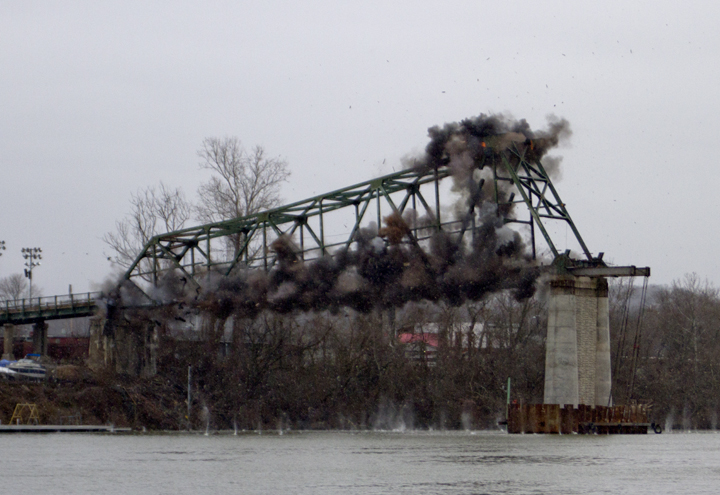
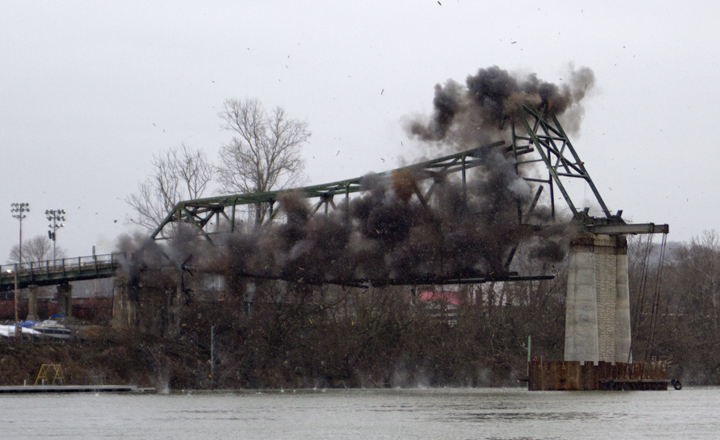
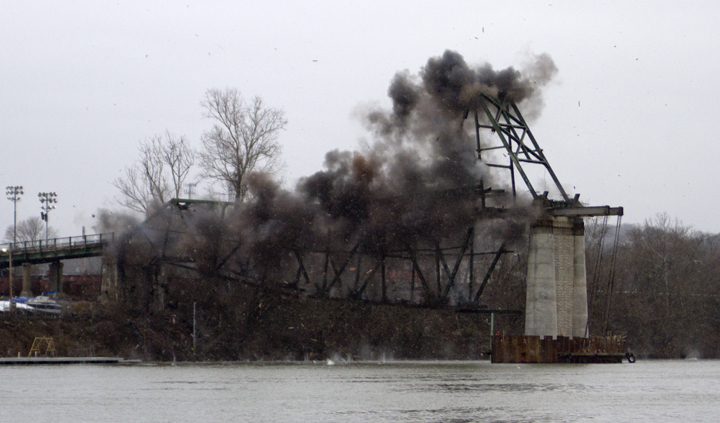
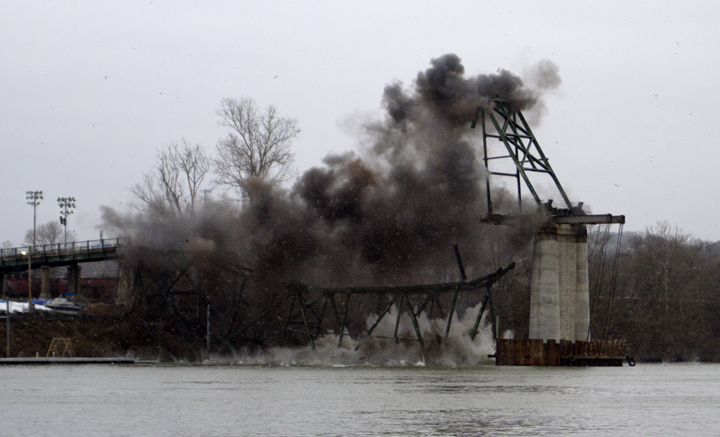
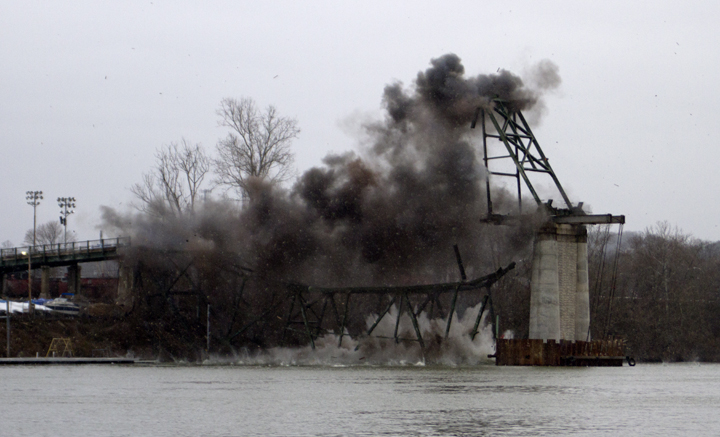
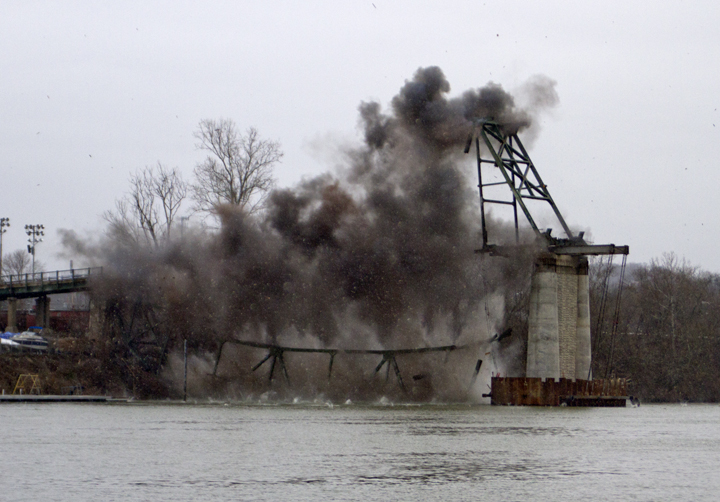
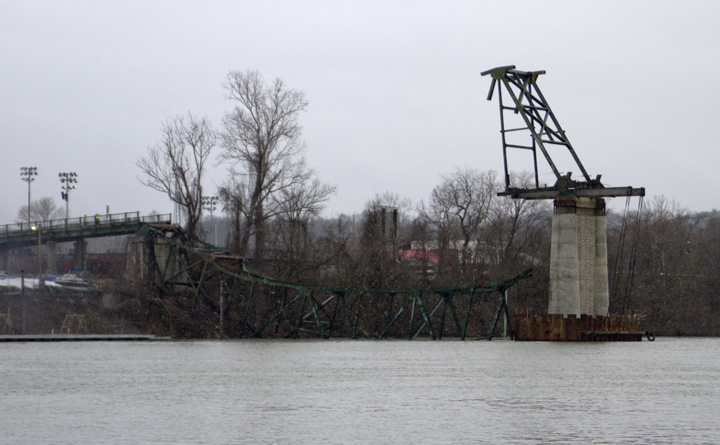
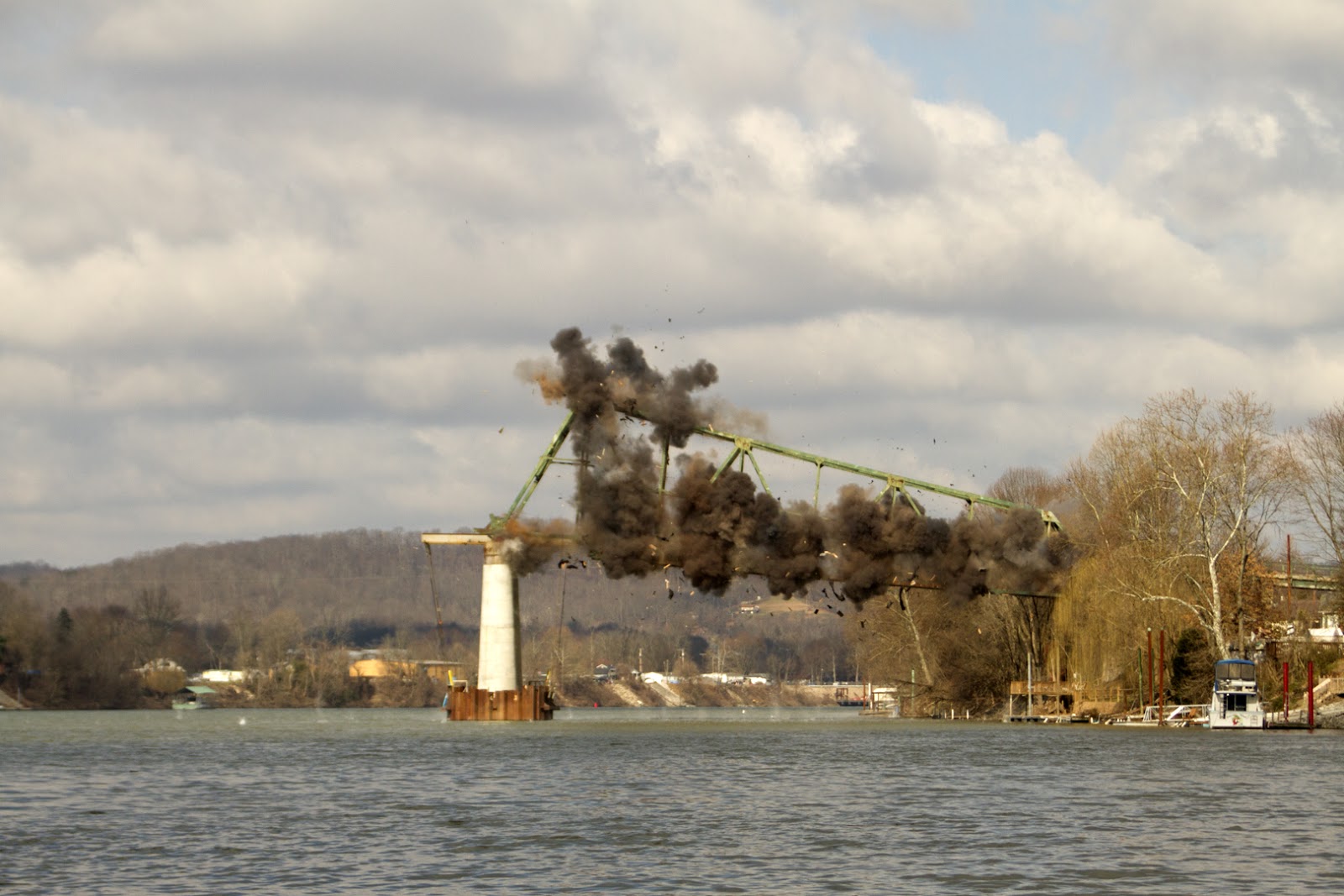
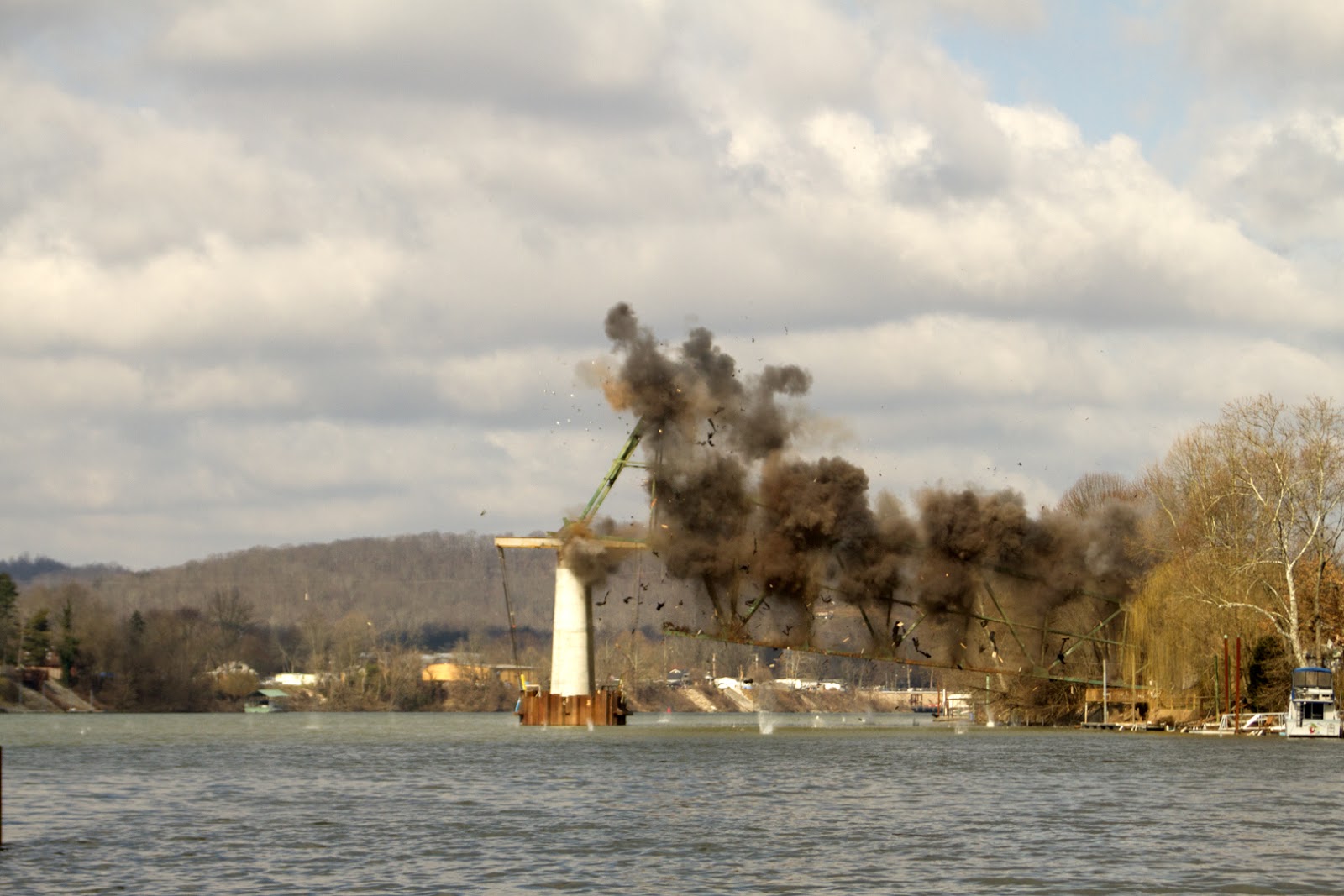
Friday, March 1 and today (March 8) the WVDOT demolished the remaining portions of the Dick Henderson Bridge, spanning the Kanawha River between Nitro and St. Albans. You can read my thoughts and see pictures on the process following the St. Albans side demolition.

Since I was fortunate enough to have a unique perspective on the demolition, standing on a friend’s boat in the middle of the river, I decided to put together a side-by-side video of both demolitions. Click on the YouTube video below. Watch it full screen for the full effect.
And here are some select images from the sequence.

.

Filed Under: Photography

A bridge runs over it

March 1, 2013 By Eric Douglas

Depending on which side of the river you grew up on the steel span is known as the Nitro-St. Albans Bridge or the St. Albans-Nitro Bridge, but it has been (since 1934) a connection between two small towns.

Nitro and St. Albans High Schools have always been “rivals” because of their proximity. Can you say “cross-river rivals” as compared to cross-town? I remember, in high school, piling into a buddy’s car and going over the bridge (circa 1983/84) to go to one of the two Taco Bells in the valley for lunch. And then racing back quickly before the next period bell rang. I dated girls on the other side of that bridge, went to some of the nicer restaurants in the valley for special dinners over that bridge and worked at Husson’s Pizza’s St. Albans store from time to time over that bridge (I worked in the Cross Lanes store in high school, but went over there to fill in from time to time.)

I also remember driving over it 20 years ago thinking that it was too small and falling apart.

This morning I watched the St. Albans side of the bridge get blown up to make way for a new one. Next week, they will drop the Nitro side. And then a new bridge will go up in its place.  I’m sure that new bridge will serve the two communities equally well, bringing them back together in the same way the old one did. And I fully understand the reason for tearing the old one down. Still, it’s sad to see that piece of history torn down.

The following is from the website Bridgemapper.com, with historical/design details for the bridge.
“The 1934 Dick Henderson Memorial Bridge is the oldest cantilever bridge over the entire Kanawha River. The structure is unusual for several different reasons. It is an extremely rare example of a cantilever in which the entire top chord is divided into only 9 sections. With most cantilevers, the top chord curves upwards to form pointed towers. With the Dick Henderson Bridge, the top chord has a linear upwards slope and towers with flat tops. It is the only cantilever bridge like it in the area. In the early 1930’s, virtually all steel bridges were comprised of built up v-laced compression members. The Dick Henderson Bridge only uses rolled H-section beams for all of its members. H-section rolled beams did not even begin to be used on bridges until around 1920. The beams are more often seen on bridges from around 1940 and beyond, making the Dick Henderson Bridge look much more modern than it is.”


Many thanks to JD Pauley and the Hobby III for the unique perspective of being in the middle of the river for the event.

The following includes seven images, out of 30, taken during the blast.

.

Filed Under: Photography

Remembering the Adena and ourselves

February 27, 2013 By Eric Douglas

As a writer, I always try to blend multiple influences into a single story; historical references and present day events. Lately, I’ve been learning more about the Adena Indians who lived in the Kanawha Valley more than 2,000 years ago.

You know what I’m talking about. The “mound” in South Charleston is the Criel Native American Burial Mound and was probably built around 250-150 BC. Most people know it’s an Indian burial mound, but they don’t realize it predates the time of Christ. It’s amazing to me there was a culture sophisticated enough to build elaborate burial mounds here, and throughout the region, that long ago. (There are some really nice illustrated signs around the base of the mound that offer a basic history, if you’re interested.)

I recently had the opportunity to listen to Greg Carroll talk about Native American history in West Virginia and surrounding areas at a lecture offered by the West Virginia Culture Center Archives and History Library. He made the point that the Adena were “stratified”. He meant there were leaders who were held in great esteem and there were classes of workers below them. He was careful to point out, though, that these workers were not slaves. They were organized in such a way that the leaders could encourage the tribal members to work together, probably for years, to build massive earthen mounds.

The Criel Mound was 33 feet tall and 173 feet in diameter at the base when it was built. (It is the second largest such mound in the state, behind the Grave Creek Mound in Moundsville.) That’s not a weekend project.
In the modern era, there has been a resurgence of people interested in exploring and identifying with their Native American heritage. Carroll noted that there are very few records—little or no proof of Native American genealogy—that people can point to prove their own personal connection. As recently as 100 years ago, the federal government discouraged people from even admitting that they were Native American in census records. Often, stories of an Indian in the family are oral histories passed down from generation to generation, but there’s no documentation.
My own family history has no Native American connection. I couldn’t be more Scotch-Irish if I tried. Still, I think it is important to explore and understand our past, both distant and more recent, Indian or not. We need to capture those memories in a way that future generations will be able to look back at what we recorded and understand. Carroll closed his presentation by telling everyone to “write down those family oral histories” so we can have a clearer understanding of our family. I think that’s great advice. 
For now, I’ll keep digging into the Adena burial mounds (figuratively, not literally) to see what I can find. Who knows, they might just show up in an upcoming novel…

Eric Douglas will be offering a presentation on Do-It-Yourself Documentaries as part of the Creators Program at DigiSo in Charleston on Friday, March 1 at 7 pm. Cost is $25. Visit the DigiSo website for more information. (www.digiso.org)

.

Filed Under: Books

But for a few moments

February 27, 2013 By Eric Douglas

In my life I think I’ve written a total of four poems (not counting school assignments) and there is a reason for it. But, sometimes it is fun to just throw things out there.

The following was inspired by a little time taking a break from my desk, today.
 

But for a few moments

All is still, save the wind in the trees

The bite of winter signals more to come

Winter is still upon us

But for a few moments, everything is holding its breath.


Thoughts of sea in winter

Facing into the wind, making way

A leaden sky overhead; the illusion of movement

But for a few moments, transported elsewhere.


Gusts twist and turn, swirling

Strips everything bare. No veneer, no pretense

Left too long, nothing would be left

But for a few moments, it feels clean.


A single ray of sunlight breaks; no warmth but hope

The dull buzz of civilization stays in the distance

Tiny birds know it’s time to forage before seeking shelter

But for a few moments everything is simple.


Tree tops dance in the wind

The tiniest buds already showing

Fingers stiff and unbending; nose cold

But for a few moments refreshed, feeling more alive.

.

Filed Under: Uncategorized

Inside secrets of Flooding Hollywood

February 20, 2013 By Eric Douglas

Over the last few weeks, I’ve been writing about the sparks that led to my short stories and novels. You can read about Cayman Cowboys and Going Down with the Ship here. Since I’ve just re-released Flooding Hollywood and I’m giving away the Kindle version all this week, it seemed like a good time to focus on my second novel.

I wrote Flooding Hollywood in 2005 and it came out in the Spring of 2006. At the time, everyone was writing about foreign terrorists, so I wanted to avoid that topic. But the story really didn’t come together until I was playing with Google Earth one day. The software was pretty new, having been introduced to the world in 2004 after Google bought it from Keyhole, a company financed by the CIA. (Does that surprise anyone?)
I was playing with the software, flying around southern California when I realized there was a huge body of water in the hills above LA. A little research and I discovered it was an old water reservoir that was literally poised on top of the city of Los Angeles and Hollywood. At that point, my fertile imagination took over and it became a target in my mind. And of course, since I write about diving and underwater action, I realized that would be a chance for me to work in some freshwater diving as well. I also wrote my first underwater fight scene. It’s harder than you might think…
Here are a couple little pieces of inside information about the book. I originally wrote it as a screenplay; I even registered it with the Screen Actors Guild. Then I decided to go back and rewrite it as a book. When I was writing it, the name of the female lead character was Jennifer. When it came time to finish it up, I decided to change it to Diane, but throughout the development of the story, it was Jennifer. I had imagined that maybe I could get Jennifer Garner to play that role in the film version…we are from the same hometown, although I’ve never met her. There hasn’t been a film version yet and Jennifer Garner has no idea the story exists.
You can download the Kindle version free through Friday at midnight. If you want the print version it is $9.99. After the FREE period, Kindle copies will be $4.95. For more information on the book visit my website: Flooding Hollywood. To go directly to Kindle, get it here.
As a bonus, I’ve also lowered the price on the fourth novel in the Mike Scott adventure series Wreck of the Huron. You can now purchase a print copy of the novel for $12 and Kindle editions are only $7.99. The Amazon page for Wreck of the Huron is here.
Excerpt from Flooding Hollywood
As Mike swam closer, his mind started replaying the conversation he had with Commander Light following the takedown of the terrorist cell in Mexico. He could hear Light’s voice in his ear. “Pull out the detonator cap. This type of plastic explosive only needs one blasting cap. The rest of them will go off by chain reaction.”
Mike reached out and gingerly pulled the detonator out of the plastic explosive bundle. Realizing that the detonator was a small bomb itself, Mike picked up the timer. After a second, he found a switch and turned off the timer as well. It was then that he realized that only a few seconds remained on the countdown. They surely would have been killed when the blast went off underwater. The shock waves and concussion would have knocked them unconscious, even if they weren’t close to the actual blast. And that was assuming that the water wouldn’t have swept them quickly through the gap in the wall and down into the valley below.
After a second, Mike looked up to see Diane beside him. He gave her a big smile behind his regulator. Giving her the OK signal and then the thumbs up signal to ascend, she agreed and responded with an OK back. Mike grabbed his pressure gauge to see how much air he had left. He confirmed that it was time to get on the surface—immediately. They had been underwater for more than twenty minutes and had gone fairly deep; they were more than eighty feet down when they found the bombs. Their air supply was running low.
Carrying the detonator with them, Mike and Diane began swimming for the surface. Looking up as he ascended, Mike saw two divers descending toward them. Guessing they were members of the police dive team, Mike handed the timer and detonator to Diane and signaled to them, using his arm and then his light. The two divers altered their course and headed straight for Mike. As the men got closer, Mike began to have second thoughts about the identity of the other divers. As the gloom parted and the men got close, he realized it was the terrorists coming back. They had been watching the lake and returned to make sure the bomb went off as planned.

.

Filed Under: Books, Diving

  • « Previous Page
  • 1
  • …
  • 56
  • 57
  • 58
  • 59
  • 60
  • …
  • 87
  • Next Page »
Now Available!

Photojournalist Mike Scott is about to get married to the woman he loves — archeologist Frankie DeMarco – but her kidnapping sets Mike on a collision course with the treasure hunter who took her. The man wants Frankie’s help finding a 400-year-old shipwreck so Mike sets out to find it first to get her back […]

View Book

  • Facebook
  • Instagram
  • LinkedIn
  • Substack
  • Threads
  • YouTube
Privacy Policy

Copyright © 2025 ·