Books by Eric Douglas

Thriller fiction and Non-fiction

  • Home
  • Mike Scott Thrillers
    • Explosion: Down Below
    • Held Hostage: Search for the Juncal
    • Water Crisis: Day Zero
    • Turks and Chaos: Hostile Waters
    • The 3rd Key: Sharks in the Water
    • Oil and Water: Crash in Curacao
    • Return to Cayman: Paradise Held Hostage
    • Heart of the Maya: Murder for the Gods
    • Wreck of the Huron: Cuban Secrets
    • Guardians’ Keep: Mystery below the Adriatic
    • Flooding Hollywood: Fanatics at the Dam
    • Cayman Cowboys: Reefs Under Pressure
  • Withrow Key
    • Lyin’ Fish
    • Tales from Withrow Key
  • Agent AJ West
  • About the Author
    • Publicity and Interviews
  • Nonfiction
    • For Cheap Lobster
    • Heart Survivor: Recovery After Heart Surgery
    • Oral History
      • Batter Up!
      • Memories of the Valley
      • WV Voices of War / Common Valor
      • Capturing Memories: How to Record Oral Histories
    • Dive-abled: The Leo Morales Story
    • Keep on, Keepin’ On: A Breast Cancer Story
    • WV Voices of War / Common Valor
    • Russia: The New Age
    • Scuba Diving Safety
  • Free Short Fiction
  • Other Fiction
    • Sea Turtle Rescue and Other Stories
    • River Town
You are here: Home / Diving / Underwater debris not “out of mind”

Underwater debris not “out of mind”

September 17, 2015 By Eric Douglas

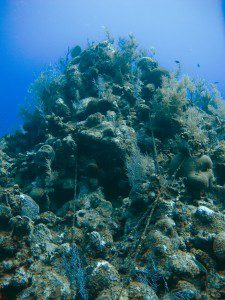
fishing line
Those straight lines are actually fishing lines that are now encrusted in the reef.

“Out of sight, out of mind.” This cliché is true for a lot of things. Something might be vitally important to us, but the moment we set it down, and walk away, we forget where we left it. Like that cup of coffee this morning. Or your car keys.

Just because something is out of your mind, doesn’t mean it’s not there anymore or is no longer a problem. For years, our oceans have been a dumping ground for the things we don’t want to see any more.

The problem is that junk that we’ve thrown into the ocean just stays there. Or it floats. And it kills birds or turtles, porpoises and whales who get tangled in it.

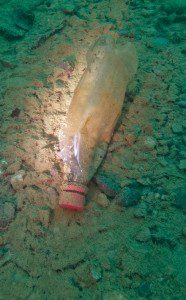
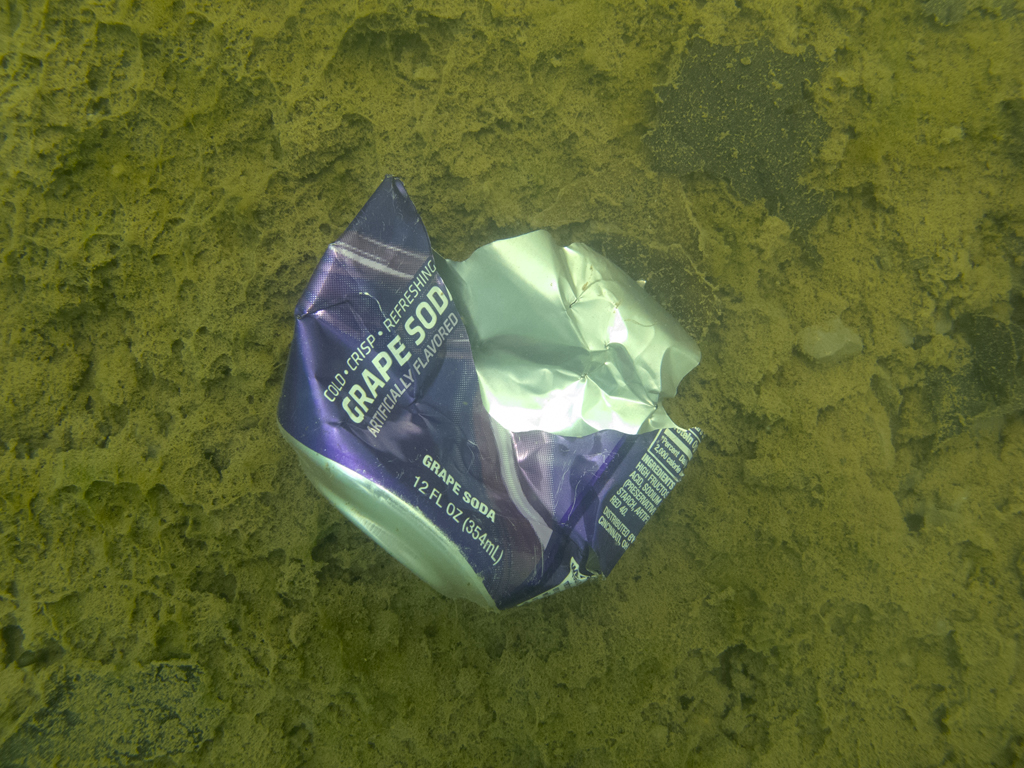
When I dive, I often pick up trash that hasn’t been down too long. When I was diving in Grand Cayman recently, I spotted an empty tuna can and tucked into my BCD to bring it to the surface, for example. bottleI know lots of divers who do that. On the other hand, if fishing line is entangled in a reef, you’ll do more damage by pulling it lose than leaving it in place. A can or a bottle that has been on the bottom for a while might have something living in it. In the local lake where I learned to dive, and many divers explore every day in the summer, I often see beer cans, plastic cups and other debris on the bottom.pop can
Today, most of us who grew up with the crying native American standing beside the road from the Keep America Beautiful commercial get angry when we see litter by the side of the road where some inconsiderate, selfish slob has thrown it from their car. We need to have that same reaction when we see trash in the ocean. National Geographic reported earlier this year that eight million tons of plastic trash is dumped into the ocean every year.

You might have heard of the floating garbage dump in the North Pacific, but did you know there are actually five floating gyres of plastic and trash?

What you can do

1) Look for alternative materials or avoid excessive packaging when deciding on purchases. Use paper bags, milk and juice in cardboard, and cloth diapers. Insist on paper bags and glass bottles.

2) Recycle. Many communities currently offer pick-up recycling programs for #1 and #2 plastics. Other forms of plastic may be accepted by a local recycling business. If your community doesn’t have a recycling program, contact your city or town hall to request one.

3) Educate others about the problem of marine debris, enhancing “voluntary compliance through awareness.”

4) Get involved. Locate or start a cleanup in your area.

From the Woods Hole Oceanographic Institute

PADI’s Project Aware is organizing the Beneath the Waves drive for divers to share their photos of underwater debris on Instagram and Twitter  with the hashtag #BeneathTheWaves leading up to the Our Ocean 2015 conference on October 5 and 6.

Divers, it’s time to do more than picking up a piece of trash or two and bringing it to the surface. Show the world what you see. Maybe then, it won’t be out of sight any longer.

 .

Filed Under: Diving, Photography

Now Available!

Photojournalist Mike Scott is about to get married to the woman he loves — archeologist Frankie DeMarco – but her kidnapping sets Mike on a collision course with the treasure hunter who took her. The man wants Frankie’s help finding a 400-year-old shipwreck so Mike sets out to find it first to get her back […]

View Book

Spooky Flash Fiction For Advent 2025

December 18, 2025 By Eric Douglas

In the 1963 Andy Williams song, “It’s the Most Wonderful Time of the Year,” there is a line that says “There’ll be scary ghost stories, And tales of the glories of Christmases long, long ago.”

Take a flight in a biplane!

https://youtu.be/WN8BrcSNel0
https://youtu.be/lFWWbTXrTJQ?si=SJAadKSt9ZLCbOvX

How I got into diving!

https://youtu.be/gKhw-4tORAM

Heart Blog

Heart Survivor Book Proceeds to Heart Walk

Charleston author Eric Douglas will donate proceeds from his book Heart Survivor: Recovery After Heart Surgery to the 2017 Charleston Heart Walk. Douglas wrote the book to detail his recovery from open-heart surgery and his return to fitness to inspire others facing the same diagnosis. In January 2016, Douglas visited his doctor to rule out the […]

More Posts from this Category

Heart Blog
  • Heart Survivor Book Proceeds to Heart Walk
    Charleston author Eric Douglas will donate proceeds from his book Heart Survivor: Recovery After Heart Surgery to the 2017 Charleston Heart Walk. Douglas wrote the book to detail his recovery from open-heart surgery and his return to fitness to inspire others ...
  • Introduction to the book Heart Survivor
    The following is most of Chapter 2 from the book Heart Survivor. I thought it was important to help my readers understand that I should have recognized the signs and symptoms of impending heart issues, but even with that experience, ...
Read more

Return to Cayman book trailer

Sunlight Prints

Cyanotype printing, also known as Sunlight Prints, is an antique photo printing technique, first used around 1842. Cyanotypes are made by mixing two chemicals (ammonium iron citrate and potassium ferricyanide) and treating paper, cloth or canvas, making it sensitive to ultraviolet light. The sun turns the chemical blue while whatever is shaded stays white. One of the earliest uses for cyanotype was for naturalists to capture images of plants. The same process is used to create “blue prints” of … Read more

The Buzz

You want to explore the ocean, alongside Mike Scott! -- Rosemary E Lunn Diving Journalist and Scuba Industry Fixer
Land Sharks cover
  • Facebook
  • Instagram
  • LinkedIn
  • Substack
  • Threads
  • YouTube

Privacy Policy


NO AI POLICY: Eric Douglas/BooksbyEric does not use artificial intelligence tools to generate, draft, edit, or automate our core work—including writing, artwork or photography. Everything we produce is created by humans.

Copyright © 2026 ·