Books by Eric Douglas

Thriller fiction and Non-fiction

  • Home
  • Mike Scott Thrillers
    • Explosion: Down Below
    • Held Hostage: Search for the Juncal
    • Water Crisis: Day Zero
    • Turks and Chaos: Hostile Waters
    • The 3rd Key: Sharks in the Water
    • Oil and Water: Crash in Curacao
    • Return to Cayman: Paradise Held Hostage
    • Heart of the Maya: Murder for the Gods
    • Wreck of the Huron: Cuban Secrets
    • Guardians’ Keep: Mystery below the Adriatic
    • Flooding Hollywood: Fanatics at the Dam
    • Cayman Cowboys: Reefs Under Pressure
  • Withrow Key
    • Lyin’ Fish
    • Tales from Withrow Key
  • Agent AJ West
  • About the Author
    • Publicity and Interviews
  • Nonfiction
    • For Cheap Lobster
    • Heart Survivor: Recovery After Heart Surgery
    • Oral History
      • Batter Up!
      • Memories of the Valley
      • WV Voices of War / Common Valor
      • Capturing Memories: How to Record Oral Histories
    • Dive-abled: The Leo Morales Story
    • Keep on, Keepin’ On: A Breast Cancer Story
    • WV Voices of War / Common Valor
    • Russia: The New Age
    • Scuba Diving Safety
  • Free Short Fiction
  • Other Fiction
    • Sea Turtle Rescue and Other Stories
    • River Town
You are here: Home / Uncategorized / Halloween, religious holidays and donuts

Halloween, religious holidays and donuts

October 31, 2013 By Eric Douglas

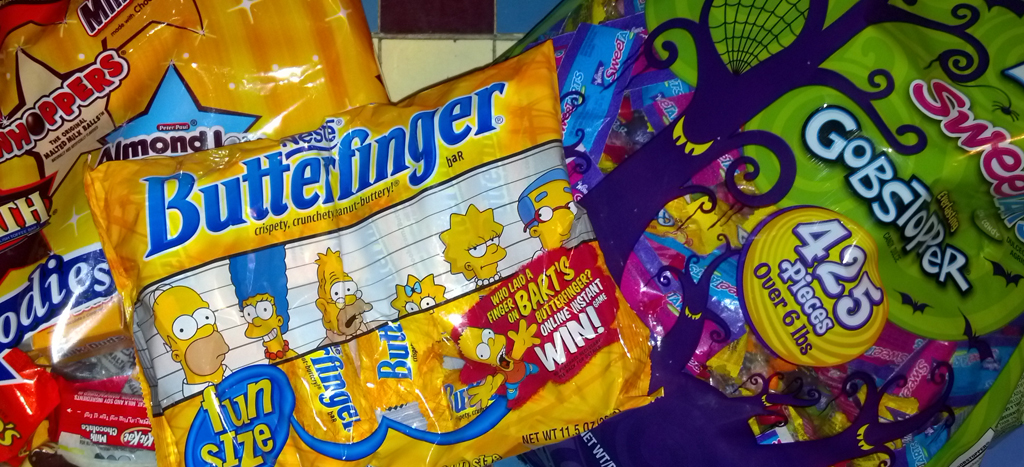
2013-10-31 08.09.53Halloween isn’t exactly Black Friday, but it is the highest revenue-producing holiday for the candy industry, with approximately $2.5 billion in sales. That’s an incredible amount of sugar for one day. Of course, the less desirable Halloween candy tends to hang around much longer.

While Halloween is a night many dress in costumes and knock on doors asking/begging for candy, others look forward to the ‘trick” aspect, moving into the world of the criminal (See Devil’s Night in Detroit). It didn’t always mean that, however. Believe it or not, there is actually a religious significance to Halloween.

Halloween is All-Hallows’-Eve which is the night-before-All Saints’ Day. All Saints’ Day is also known as All Hallows Day—see the connection? Until the 1950s, when the Catholic Church simplified the church calendar, it was actually a liturgical vigil. All Saints’ Day also corresponds to the Day of the Dead where people (mostly in Latin America) remember those who have passed on, a sort of Memorial Day. Day of the Dead typically celebrates children who have died on November 1 and adults on November 2.

Trick or Treating has its roots in “souling” or “guising” (wearing disguises) where the poor would go around door to door asking for treats in exchange for saying prayers for the dead. Wearing costumes is a Celtic tradition where people would try to copy or placate evil spirits. When the poor would knock, they would beg for soul cakes—a type of short bread. According to legend, one chef was determined to make eaters think of heaven with every bite. She cut a hole in the middle of the cake, dropped it in hot fat and the donut was born.

Of course, if you go back even further than the Middle Ages, the pagan festival of Samhain was celebrated around the same time and marked the end of fall and the coming of winter, bridging the ancient world to a time of darkness and death. The church either “blessed” that tradition and took it over, or simply created a new festival to give the people something to celebrate.

Like a lot of holidays, modern society has changed the original message or purpose away from the religious and toward the secular, corrupting the original purpose. I enjoy the fun of Halloween, but in some ways I think it’s a shame that we’ve moved away from the original idea of remembering those who have gone on before us, saints or not, and reflecting on the year that has just past.

It is a real shame, though, that no one is giving out donuts for Trick or Treat anymore. I could get into that one…

Read the rest of the stories from me and a few friends on the Halloween 2013 Collection page. They include a couple works of fiction and a couple creative nonfiction pieces. You be the judge..

Filed Under: Uncategorized

Now Available!

Photojournalist Mike Scott is about to get married to the woman he loves — archeologist Frankie DeMarco – but her kidnapping sets Mike on a collision course with the treasure hunter who took her. The man wants Frankie’s help finding a 400-year-old shipwreck so Mike sets out to find it first to get her back […]

View Book

Spooky Flash Fiction For Advent 2025

December 18, 2025 By Eric Douglas

In the 1963 Andy Williams song, “It’s the Most Wonderful Time of the Year,” there is a line that says “There’ll be scary ghost stories, And tales of the glories of Christmases long, long ago.”

Take a flight in a biplane!

https://youtu.be/WN8BrcSNel0
https://youtu.be/lFWWbTXrTJQ?si=SJAadKSt9ZLCbOvX

How I got into diving!

https://youtu.be/gKhw-4tORAM

Heart Blog

Heart Survivor Book Proceeds to Heart Walk

Charleston author Eric Douglas will donate proceeds from his book Heart Survivor: Recovery After Heart Surgery to the 2017 Charleston Heart Walk. Douglas wrote the book to detail his recovery from open-heart surgery and his return to fitness to inspire others facing the same diagnosis. In January 2016, Douglas visited his doctor to rule out the […]

More Posts from this Category

Heart Blog
  • Heart Survivor Book Proceeds to Heart Walk
    Charleston author Eric Douglas will donate proceeds from his book Heart Survivor: Recovery After Heart Surgery to the 2017 Charleston Heart Walk. Douglas wrote the book to detail his recovery from open-heart surgery and his return to fitness to inspire others ...
  • Introduction to the book Heart Survivor
    The following is most of Chapter 2 from the book Heart Survivor. I thought it was important to help my readers understand that I should have recognized the signs and symptoms of impending heart issues, but even with that experience, ...
Read more

Return to Cayman book trailer

Sunlight Prints

Cyanotype printing, also known as Sunlight Prints, is an antique photo printing technique, first used around 1842. Cyanotypes are made by mixing two chemicals (ammonium iron citrate and potassium ferricyanide) and treating paper, cloth or canvas, making it sensitive to ultraviolet light. The sun turns the chemical blue while whatever is shaded stays white. One of the earliest uses for cyanotype was for naturalists to capture images of plants. The same process is used to create “blue prints” of … Read more

The Buzz

You want to explore the ocean, alongside Mike Scott! -- Rosemary E Lunn Diving Journalist and Scuba Industry Fixer
Land Sharks cover
  • Facebook
  • Instagram
  • LinkedIn
  • Substack
  • Threads
  • YouTube

Privacy Policy


NO AI POLICY: Eric Douglas/BooksbyEric does not use artificial intelligence tools to generate, draft, edit, or automate our core work—including writing, artwork or photography. Everything we produce is created by humans.

Copyright © 2026 ·