Books by Eric Douglas

Thriller fiction and Non-fiction

  • Home
  • Mike Scott Thrillers
    • Held Hostage: Search for the Juncal
    • Water Crisis: Day Zero
    • Turks and Chaos: Hostile Waters
    • The 3rd Key: Sharks in the Water
    • Oil and Water: Crash in Curacao
    • Return to Cayman: Paradise Held Hostage
    • Heart of the Maya: Murder for the Gods
    • Wreck of the Huron: Cuban Secrets
    • Guardians’ Keep: Mystery below the Adriatic
    • Flooding Hollywood: Fanatics at the Dam
    • Cayman Cowboys: Reefs Under Pressure
  • Withrow Key
    • Lyin’ Fish
    • Tales from Withrow Key
  • Agent AJ West
  • About the Author
    • Publicity and Interviews
  • Nonfiction
    • For Cheap Lobster
    • Heart Survivor: Recovery After Heart Surgery
    • Oral History
      • Batter Up!
      • Memories of the Valley
      • WV Voices of War / Common Valor
      • Capturing Memories: How to Record Oral Histories
    • Dive-abled: The Leo Morales Story
    • Keep on, Keepin’ On: A Breast Cancer Story
    • WV Voices of War / Common Valor
    • Russia: The New Age
    • Scuba Diving Safety
  • Free Short Fiction
  • Other Fiction
    • Sea Turtle Rescue and Other Stories
    • River Town
You are here: Home / Blog Posts

Labor Day’s meaning has changed, but is even more important today

August 27, 2014 By Eric Douglas

We live in a very different world today than when Labor Day was a local/regional holiday. The first Labor Day parade was held on September 5, 1882 in New York City when 10,000 workers took unpaid time off to march. The “workingman’s holiday” didn’t become a national event until 1894 following the American Railroad Union’s strike against the Pullman Palace Car company, protesting wage cuts and the firing of union representatives. Riots followed the government’s intervention (they sent in troops to break up the strike) and more than a dozen workers died. To repair ties with American workers, and the unions, Congress made Labor Day a holiday.

West Virginia’s labor history has been an interesting one. The first (and I’m pretty sure only) time the federal government bombed Americans on US soil happened in West Virginia during the 1921 Miner’s March on Logan. There have been scores of strikes, marches and protests over the last hundred years, in the coal industry and in others. Growing up, my dad was in a union and I remember my mother’s worry when he was facing a potential strike. (I think they went out for a couple days, but it was quickly resolved.) There were other times a strike was possible, but it was averted by last-minute negotiations.

One hundred and twenty years later, union membership has waned significantly (although there are still some very strong labor unions) and one-third of Americans work for small companies (fewer than 50 employees). Employment conditions have certainly changed, too. The strikes and boycotts of the industrial revolution led to the eight-hour work day and 40-hour work week, with paid vacation time, rules on child labor and many of the other benefits we consider standard.

In some ways, we are going through a new revolution; this time it is a technical one. As a nation we still produce coal and steel, cars and many, many other things. Technology and automation allow us to do the same jobs with fewer people. These changes hurt. People lose jobs they expected to have their entire lives. Groups like What’s Next, West Virginia? and Create West Virginia are interested in capitalizing on the work ethic and strength of the West Virginia worker and revolutionizing this state.

While the original purpose of Labor Day may have been to appease the labor unions and the labor movement, I think it was a tribute to the American worker regardless of where they work. On this upcoming Labor Day, enjoy the traditional end of summer; attend a football game or a picnic…or both.

At the same time, think about how you can create a new West Virginia. And ask yourself What’s Next?.

Filed Under: Uncategorized

Creative types have to stick together

August 20, 2014 By Eric Douglas

Douglas will be signing books tonight at Taylor Books

Pageflex Persona [document: PRS0000038_00067]Part of the creative process is paying your dues. That’s why I’ve never liked these television shows that promise to discover the next great singer/voice/juggler or whatever. These wide-eyed kids may have the raw talent to become the next star, but if you listen to the radio, it’s rarely the person with the most amazing voice that gets the recording contract. And the only ones that stay around for more than a year or two before they get chewed up and spit out by fame are the ones with character and who are true to themselves.

I’ve always loved to listen to live music, and I’ve seen some great concerts. But I’m just as happy going to some small venue where a band is still working out the kinks. Sometimes it is terrible and sometimes it is magic. Most of them have dreams of getting discovered but they also understand that they need to perfect their craft before they can even have a shot at filling an arena. There are others who play simply for the love of the music. I know a few musicians who have had a taste of fame and turned their back on it; but they still love to play.

Musicians aren’t the only ones who have to pay their dues; it’s everyone who wants to create or entertain–painters, photographers, writers and poets. Every creative person dreams of a coffee table book of their photographs or a solo exhibit at an art gallery. There is a fine line between making your art commercial and staying true to your own vision. We all struggle to find it.

A couple weeks ago, I took my daughter to her pediatrician and as we checked in, a nurse stopped me to tell me that she loved my stories in the paper. It was nice and I really appreciated her taking the time to tell me so.

As a writer, I’ve often likened myself to a struggling musician selling CDs out of the trunk of my car. And every day I get up and work on it some more, hoping more people will notice and appreciate what I’ve done—just like a guitar player on stage. That’ s one reason when the folks at Taylor Books in Charleston asked me if I wanted to do a book signing during one of their open mic nights, I jumped at the chance.

Tonight, I’ll be signing copies of a couple of my books at Taylor Books on Capitol Street tonight from 4:30 to 6:30 pm, and I might even read a short passage from one of my books on the stage. I’m also looking forward to hearing some local talent come out to play. Or recite poetry. Or tell a few jokes.

We creative types have to stick together..

Filed Under: Books

Being a “Poverty Profiteer” and talking about coal

August 13, 2014 By Eric Douglas

A staffer for a West Virginia politician with an office in Washington, D.C. recently referred to Crystal Good, as a “poverty profiteer”. Crystal is a poet and a thinker. A West Virginia girl, born and raised, she has lived around the country, but now makes her home in West Virginia. For the record, I’ve never met Crystal and I doubt she has ever heard my name, except that we are Facebook friends through some mutual connections.

This politician’s assistant suggested she profited from poverty and liked that West Virginia is “last in everything.” Having read some of Crystal’s work, my impression is the exact opposite. She isn’t afraid to talk about poverty or the things that are wrong in West Virginia, but I’m fairly confident she would much prefer to see her friends, family and fellow West Virginians doing well. And it is hard to imagine anyone suggesting a poet is a profiteer. It is the rare poet who actually makes a profit.

In reality, this attempted shaming (which really backfired) was about coal. Having seen what coal mining does to miners and coal mining communities, Crystal had the nerve (gasp) to suggest that something that politician spouted off about the coal industry was propaganda.

My friend Daniel Boyd’s new graphic novel Carbon has been labeled “controversial” in a couple recent news reports because it dares to portray the coal industry negatively. For the record, coal MINERS are the heroes of the story. Just not the industry itself.

We refuse to have a real conversation about coal. Our “leaders” want to blame the president’s policies for coal’s decreasing market share because he is unpopular in this state. Automation and heavy machinery have drastically reduced the number of people who work in coal mines. This isn’t something that began with the latest president.  Those same “leaders” won’t put any thought into job retraining or education or a plan for what to do after coal.

There is a general election coming up and a lot of people are paying lip-service to coal and being “for” West Virginia jobs. I want to hear what they plan to do to move West Virginia into the 21st century—we should already be there. How about business start ups? Or economic diversity?  What about making sure another “water crisis” doesn’t poison the drinking water? How about protecting the quality of life in West Virginia that makes people from outside the state want to move here?

In the news business, a truism is to “follow the money”. Donations to political campaigns are public record. Find out who is donating to particular candidates and then ask yourself why. What does that company or industry hope to gain from those donations?

Another truism from the newspaper business is that you don’t start a fight with a person who buys ink by the barrel. In the modern world where words are digital, rather than ink-based, I would say you don’t want to start a fight with someone (like Crystal or Danny), who uses words, not just for a living, but because they HAVE to..

Filed Under: Uncategorized

Small town living isn’t a bad thing

August 6, 2014 By Eric Douglas

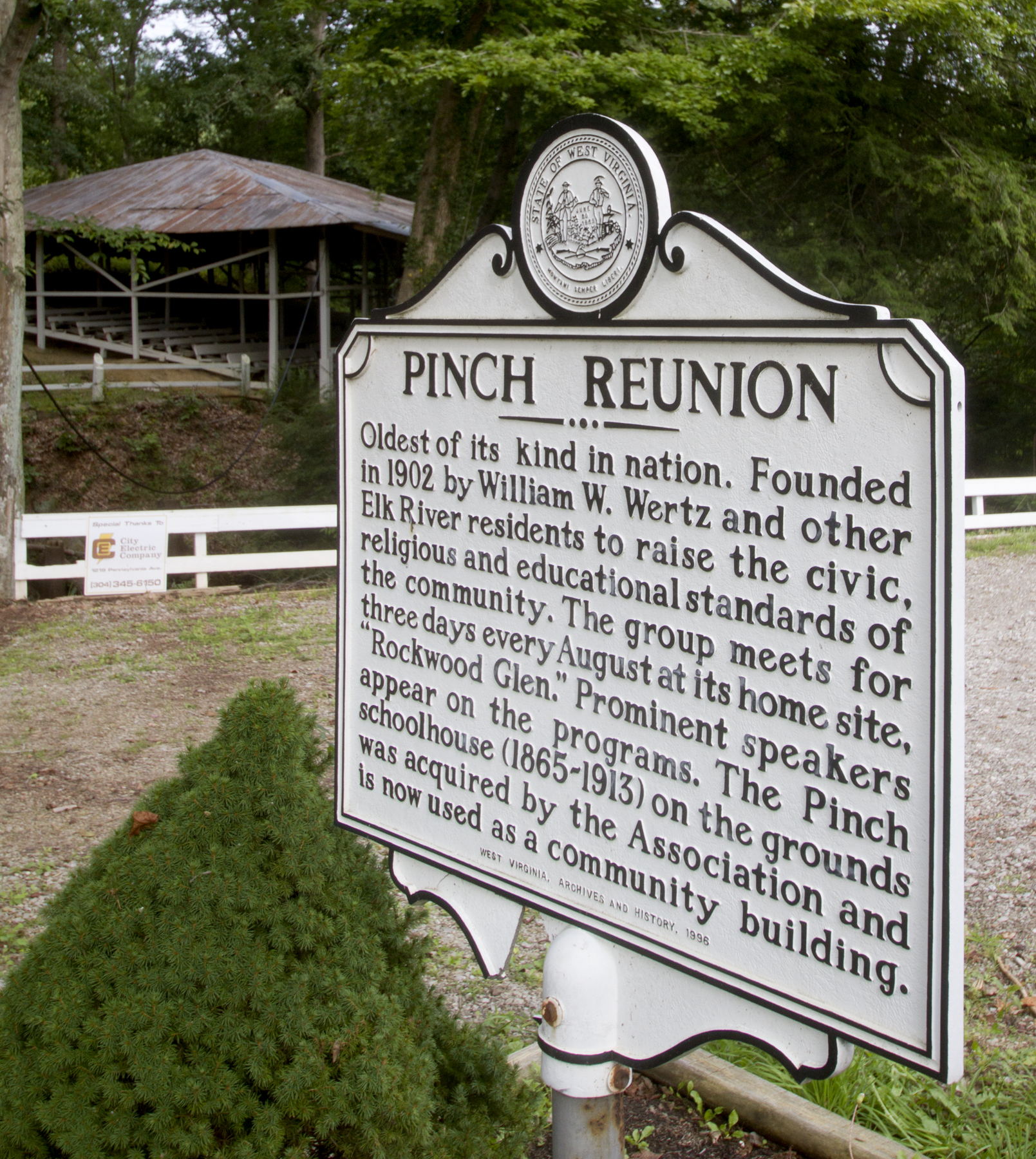
image pinch reunion signI’ve lived in California and North Carolina and traveled to six of the seven continents on this globe. I’ve seen enormous cities and I’ve seen small towns. Now that I’m back in West Virginia, I’ve found myself in Pinch, a tiny community north and east of Charleston. And I like it.

This weekend is the Pinch Reunion. The reunion is the “longest running community reunion” in the nation. It has been going on continuously since 1902. According to the website, the Pinch Reunion began to “raise the educational, religious, and family standards of the community of Pinch.”

Pinch today reminds me of Cross Lanes when I was a child in the 70s. Back then, everyone knew everyone else and that was a good thing. In the evenings, especially in the summer, everyone would be outside working in the yard, or relaxing and playing games. My dad built us a badminton court in the backyard and kids came from all over the neighborhood to play. We also had a chilled water fountain in our basement that my dad drug in from somewhere. When it was hot outside and everyone was sweaty from playing, there was nothing better than the water coming out of that fountain.

Growing up, we didn’t have a lot of extra money, but we camped at state parks and went to a lot of local festivals to hear music while my parents square danced. Those of are some of my best childhood memories.

In general, it seems like we are all busier and probably aren’t quite as social as we used to be back during my childhood. I hear kids out in my neighborhood playing, but it is just the younger ones. The older kids have too many things to do or they are busy with their phones and other electronic devices.

And that is where the Pinch Reunion comes in…for me anyway. I’m not from this area, so it isn’t like I’m going to see anyone I know there, but for me the reunion is a chance to hear some good local music in a really fun location (the “wigwam” on the Reunion Grounds is one of the coolest venues I’ve ever seen) and maybe reconnect with my own past and childhood. I’ll probably drag my girls along, too, so they can get a taste of what I’m talking about…if I can get them to put their phones down.

I’ll be there. Will you?

You can find the Pinch Reunion Schedule at: http://pinchreunion.webs.com/.

Filed Under: Uncategorized

Flash Fiction Friday

August 1, 2014 By Eric Douglas

The things that spark our imagination: a shotgun with a silencer

Loren Eaton really likes flash fiction. Until I got involved with his Advent Ghosts project, I’d never tried it. His particular brand of flash fiction is telling a complete story in 100 words. Not more. Not less. It can be a lot of fun. And it can also be challenging. Sometimes what is most important is what is left unsaid.

You can see some of my other attempts at flash fiction here.

Loren also compiles what he calls the Commonplace Book, which is really a reference he uses to collect random tidbits that may show up in stories later. Today he posted a video showing a silenced shotgun. It was pretty amazing to see the shooter rapid-fire a 12-gauge shotgun and all you hear are “clicks” as the semi-automatic action racks a new shell into the chamber.

And both of our minds went spinning. I mentioned a collaborative project and he said “100 word story”. And sometimes, especially on a Friday, that’s all it takes.

Demonstration

The room was eerily quiet as the wooden door caved in, blown from its hinges.

Just before each splintering crash, Eric heard a click. Crabwalking across the room, in the back of his mind, he wondered if he was going to live through this demonstration.

“I guess he did it. Loren was able to put a silencer on a 12-guage.”

Eric looked up to see his friend enter the room, a wisp of smoke rising from the barrel.

“Okay, okay, I believe you.”

The gaping maw of the shotgun swung around and centered on Eric’s forehead.

He heard a click..

Filed Under: Adventure, New Releases

The truth about sharks

July 30, 2014 By Eric Douglas

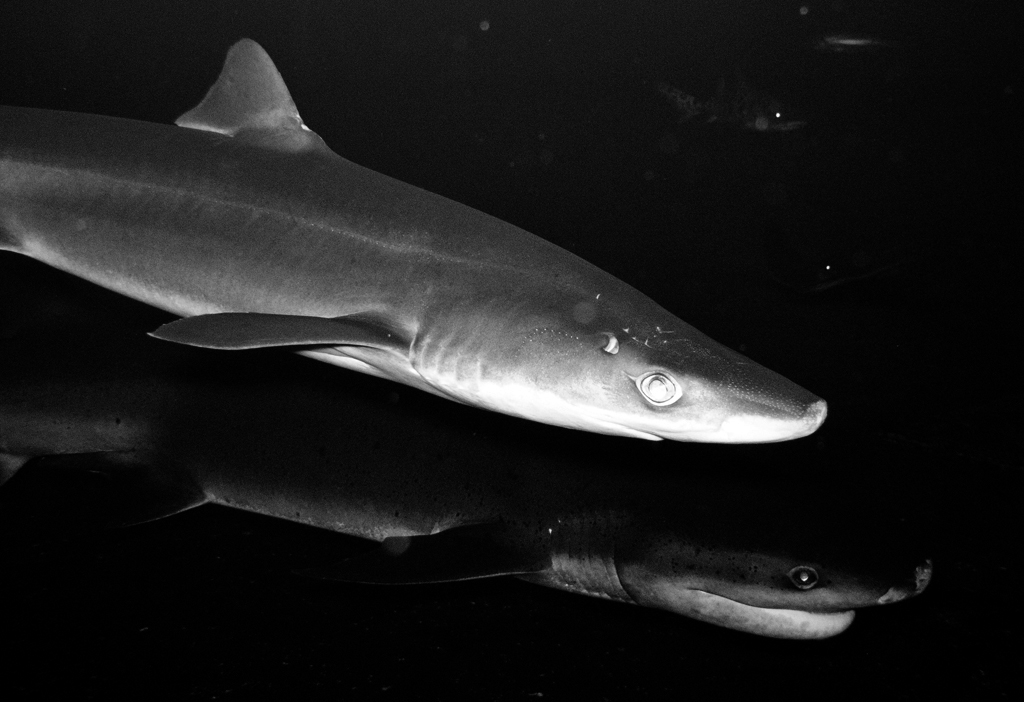
image two seven gill sharks About this time last year, I wrote about the upcoming Shark Week and why I thought it was important to understand sharks…even for those of us living in West Virginia. And then the week aired and it was terrible. It was sensationalized, fictionalized and false. I was thoroughly disgusted.
Sharks are apex predators, just like lions, grizzly bears and wolves. They live at the top of the food chain and keep animals lower on the food chain in check. The most famous example of the need for apex predators is Yellowstone National Park. When the park service reintroduced the gray wolf, elk became less abundant and allowed willow, aspen and cottonwood to grow, creating habitat for beaver, moose and other species. We have learned those lessons and stopped indiscriminately killing lions and bears and wolves on land. Unfortunately, we haven’t learned that lesson about sharks.

image shark chaseThe 1974 book (and 1975 film) “Jaws” scared people out of the ocean, afraid killer-attack sharks were coming to get them in their bathtubs. Peter Benchley, who wrote the book, said later if he had known the truth about sharks, he never would have written the book. He spent much of his later life working for ocean conservation, including protecting sharks.
I often see people post pictures of fishing trips to the beach and they proudly display three- or four-foot Sand Tiger sharks they caught from a pier as if they have accomplished something noble. In fact, all they have done is help throw the ocean out of balance. A few weeks ago a swimmer was bitten by a Great White shark in California. He said afterward that he had swam there his entire life and never seen anything like it. It turned out that people were throwing bait into the water off a pier to bring the sharks in. Right next to a swimming beach.

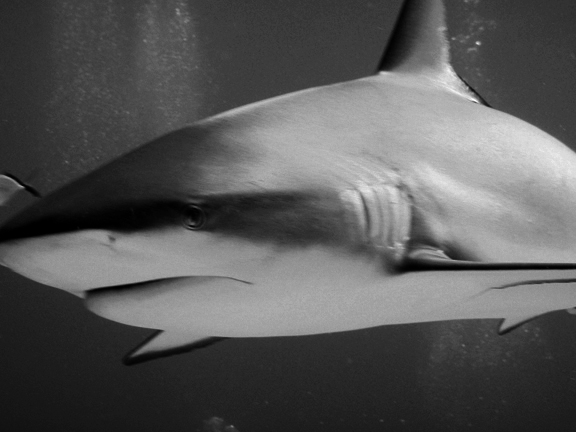
image shark eyeRealistically, though, anglers aren’t the real problem when it comes to sharks. In some cultures, shark fins are considered a delicacy so commercial fishing boats catch sharks, cutting their fins off and then throwing the rest of the animal back into the water alive to drown. It is called shark finning and by some estimates finners kill hundreds of thousands of sharks a year.

As a species, humans rely heavily on a healthy ocean. It controls our weather, provides food and gives us the air we breathe. It is a place we love to visit in the summer to get away from home. No one knows what will happen if the ocean is out of balance, but I can’t imagine it will be good.

If you want to learn more about shark finning, there are dozens of resources online. Working with Scuba Diving Magazine, I just released a short story that deals with shark finning called “Sharks on Land”. The story is free to read online. Or you can find the link to the story on my website. I wrote the story to entertain and educate at the same time.

As a bonus, the story features Mike Scott, the main character in my adventure novels. You can read a short story for free and see if you might be interested in reading one of the full-length books..

Filed Under: Adventure, Diving

  • « Previous Page
  • 1
  • …
  • 35
  • 36
  • 37
  • 38
  • 39
  • …
  • 87
  • Next Page »
Now Available!

Photojournalist Mike Scott is about to get married to the woman he loves — archeologist Frankie DeMarco – but her kidnapping sets Mike on a collision course with the treasure hunter who took her. The man wants Frankie’s help finding a 400-year-old shipwreck so Mike sets out to find it first to get her back […]

View Book

  • Facebook
  • Instagram
  • LinkedIn
  • Substack
  • Threads
  • YouTube
Privacy Policy

Copyright © 2026 ·